Some books teach a technique. Others invite us to reconsider the way we understand an entire practice. This week’s Pagan Bookshelf offers a little of both, with three works spanning spellcraft, Tarot, and the Toltec spiritual tradition.
Eileen Holland’s A Cauldron of Spells returns in a new edition, bringing a collection of practical spellwork to a new generation of readers. Rachel Pollack’s Tarot: The Open Labyrinth celebrates its fortieth anniversary with a new edition, while Michelle Rodriguez and Sergio Magaña present teachings rooted in the Toltec tradition for contemporary readers. Together, these books remind us that not everything arriving on the “new releases” shelf is entirely new. Sometimes a familiar work finds fresh life in a new edition, and sometimes traditional teachings find a new audience.
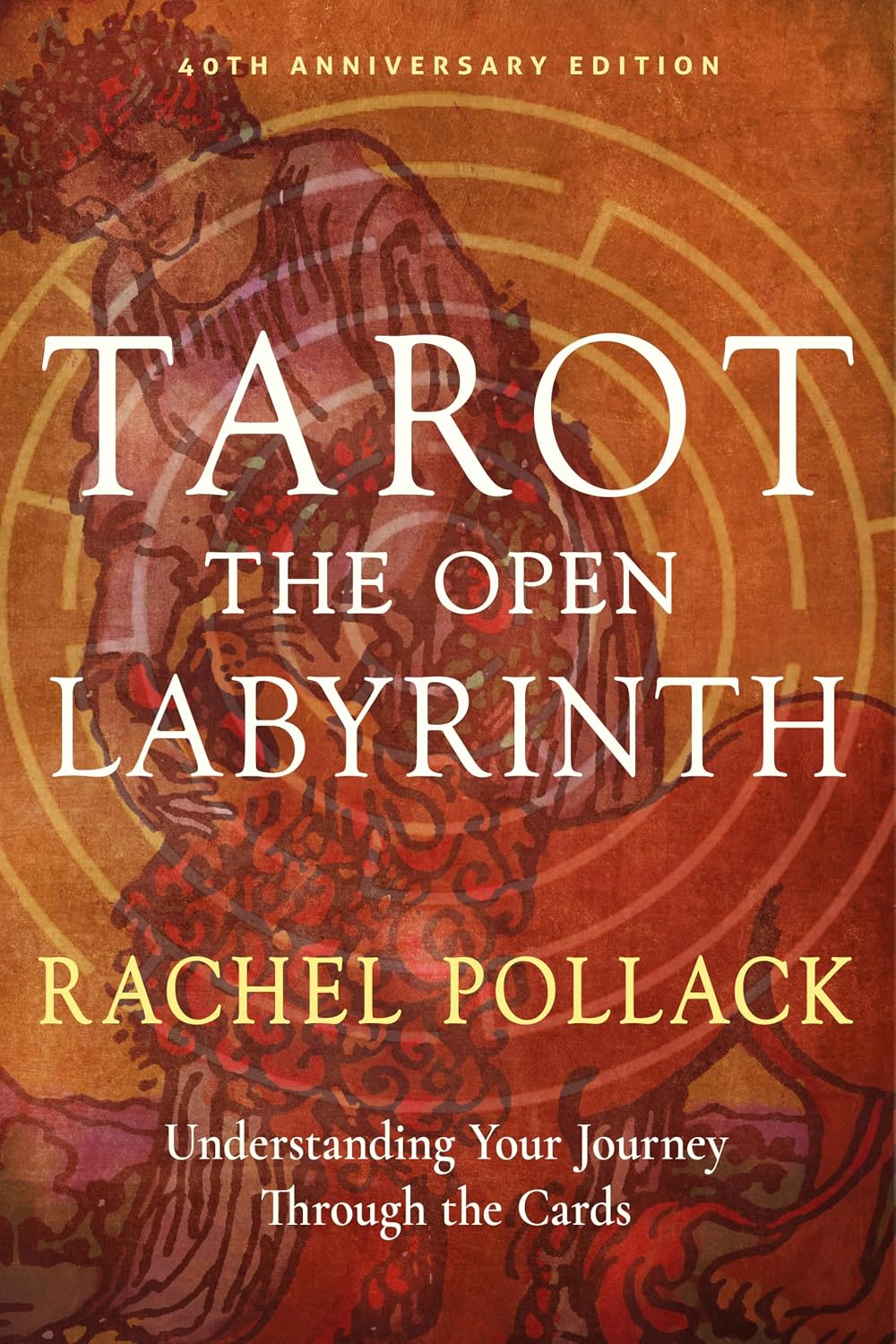
Tarot: The Open Labyrinth – Understanding Your Journey Through the Cards — 40th Anniversary Edition
By Rachel Pollack
Foreword by Zoe Matoff • Appreciation by Mat Auryn
Weiser Books
Click here to purchase: https://redwheelweiser.com/book/tarot-the-open-labyrinth-40th-anniversary-edition-9781578639144/
Reviewed By Katrina Rasbold
There are books that teach you the meanings of Tarot cards, books that teach you spreads, books that offer historical or esoteric examinations of the Tarot, and books that promise to turn you into a competent reader in some conveniently numbered collection of lessons. Rachel Pollack’s Tarot: The Open Labyrinth is something considerably rarer: a book that attempts to show you what happens inside the mind of a skilled Tarot reader while a reading is actually taking shape.
Originally published in 1986 and long out of print, The Open Labyrinth returns in this handsome 40th Anniversary Edition from Weiser Books. Pollack, who died in 2023, hardly needs an introduction to serious students of Tarot. Her Seventy-Eight Degrees of Wisdom has remained one of the foundational texts of modern Tarot study since its publication in 1980. This lesser-known work deserves renewed attention precisely because it does something different. Rather than tell us primarily what Tarot means, Pollack shows us how Tarot moves.
Pollack begins with a deceptively simple observation: some things can only be learned by doing them. A student can memorize card meanings and spread positions, but eventually there comes a point when the books and notes must give way to something less easily taught. The reader begins noticing relationships. One card comments upon another. An image suddenly becomes more important than its traditional definition. A card on one side of a spread changes our understanding of a card on the other. Somewhere along the way, we stop reciting Tarot and begin reading it. That transition is the territory of The Open Labyrinth.
Pollack describes a Tarot reading as a labyrinth, and the metaphor is particularly apt. The cards do not necessarily reveal themselves in a neat, linear sequence. We circle them. We discover an entry point and follow it inward. We return to a card we thought we understood and find that everything learned since has altered its meaning. Pollack deliberately structures her commentaries this way, describing her method as circular or spiral rather than step-by-step. The result is an unusually intimate look at interpretation as a living process rather than a formula.
That is where this book becomes especially useful for the intermediate or experienced reader. Pollack is emphatic that she does not expect readers to copy her method. Instead, she invites us to lay out the cards ourselves, consider what we would have said to the querent, and then compare our perceptions with hers. The exercise is not intended to determine who is “right.” It demonstrates how fluency with Tarot develops through engagement with imagery, symbolism, intuition, intellect, and the person sitting across the table.
The readings themselves range from a deceptively simple three-card reading through several Celtic Cross readings and Pollack’s Work Cycle, before moving finally into meditation. What makes these examples compelling is Pollack’s refusal to treat individual cards as isolated units of information. She looks for patterns, repetitions, tensions, elemental shifts and symbolic relationships. More importantly, she continually brings the reading back to the human being at its center.
This is not primarily fortune-telling Tarot. Pollack acknowledges prediction as a legitimate function of divination, but the readings selected for this book are concerned much more deeply with illumination. They uncover recurring patterns, buried fears, old wounds and choices that may not be nearly as free as the querent believes them to be. Yet Pollack does not use psychological insight to strip Tarot of its mystery. Quite the opposite. The symbolic language of the cards becomes the means through which something previously hidden can become visible.
There is also an important humility running through Pollack’s approach. She describes an ideal Tarot reader as someone who knows the cards thoroughly while remaining willing to “wrestle” with them. Reader, querent and Tarot participate together in creating the reading. Knowing what a book says about the Five of Cups is not the same thing as knowing the Five of Cups. That distinction alone is worth the attention of anyone who has reached the frustrating stage where they know all seventy-eight cards but still wonder why their readings feel like seventy-eight separate definitions.
Perhaps the most intriguing development comes when Pollack asks what happens after the reading. A reading can reveal a destructive pattern but recognizing that pattern does not automatically change it. Pollack therefore explores ways of using Tarot imagery beyond divination, particularly through meditation and arrangements of cards designed to engage more deliberately with the archetypes revealed during a reading. A symbol can do more than describe the problem; properly engaged, it may become part of the process through which the querent changes their relationship to it.
The final section develops this idea through what Pollack calls “archetypal meditation.” Here, Tarot is no longer something we merely look at. We imaginatively enter the landscape of the cards, using their symbols as experiential rather than informational tools. Pollack provides meditations involving the Fool and the Eight of Cups while encouraging readers to eventually develop their own practices.
Because the original text was written forty years ago, contemporary readers will occasionally encounter language and conceptual frameworks that reveal its age. That is inevitable in a work preserved from another era of Tarot scholarship. Rather than attempting to quietly modernize Pollack, this anniversary edition wisely provides context. Zoe Matoff’s affectionate foreword offers personal insight into Pollack as teacher, writer and human being, while Mat Auryn’s appreciation considers the work from the perspective of a later generation of Tarot practitioners. The result allows the original book to remain what it was while reminding us that Pollack herself continued learning, reconsidering and developing her ideas throughout her life.
That may be one of the finest lessons hidden within The Open Labyrinth. Mastery does not mean reaching the point where the cards have nothing left to teach us. It means becoming sufficiently comfortable with what we know that we are willing to discover what we do not.
After decades of explosive growth in Tarot publishing, there is something refreshing about returning to a book that assumes genuine proficiency requires time. Pollack does not offer shortcuts, rigid rules or a branded system that promises mastery if faithfully followed. She offers something better: the opportunity to sit beside an extraordinary reader and watch her think.
For beginners, Tarot: The Open Labyrinth offers a glimpse of what lies beyond memorization. For established readers, it offers something potentially more valuable—the invitation to examine habits that have become automatic and rediscover curiosity about cards we may believe we already know.
Forty years after its first publication, the labyrinth remains open and Rachel Pollack is still inviting us inside.
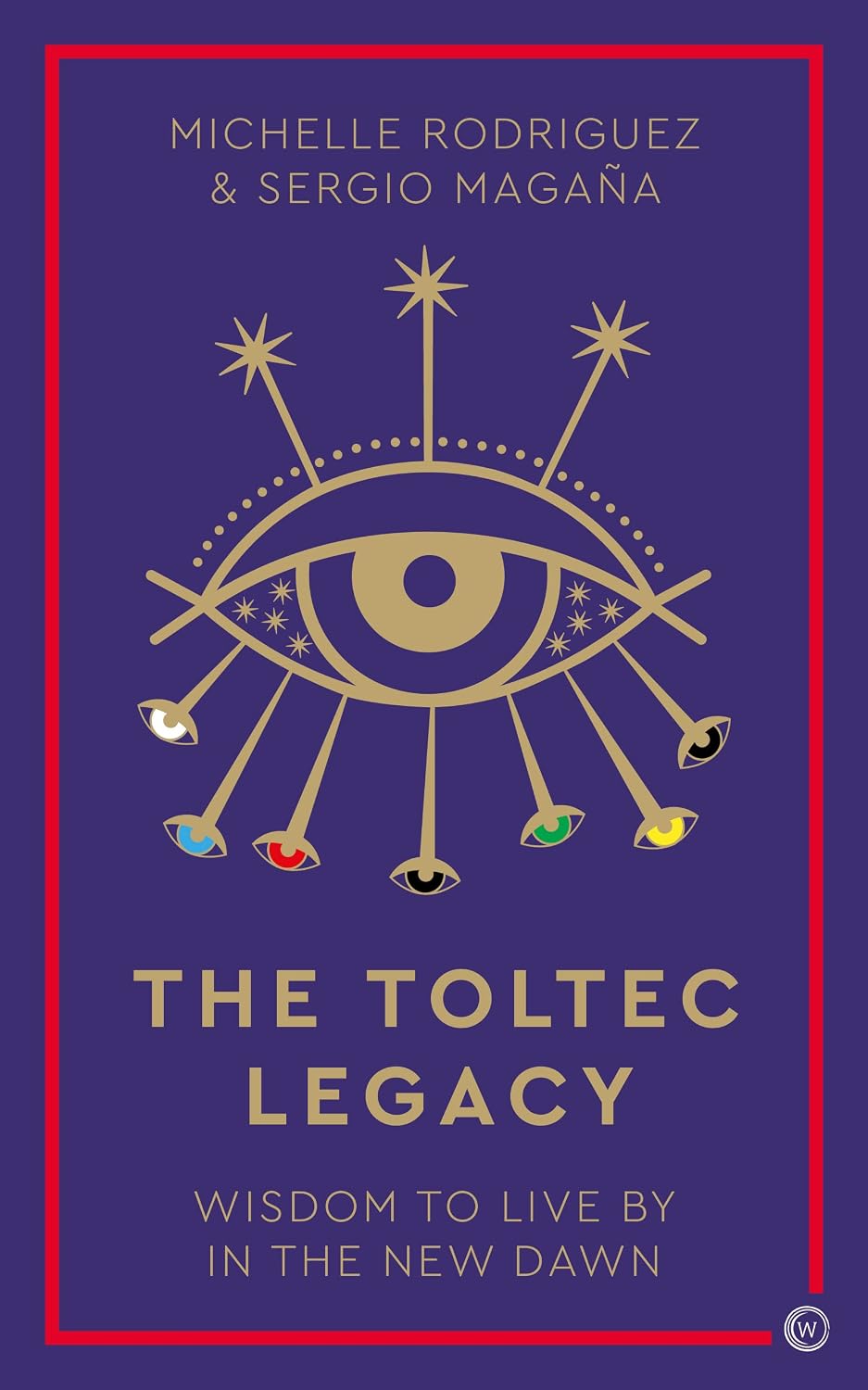
The Toltec Legacy: Wisdom to Live By in the New Dawn
By Michelle Rodriguez and Sergio Magaña
Watkins Publishing, 2026
Click here to purchase: https://redwheelweiser.com/book/the-toltec-legacy-9781786787347/
Reviewed by Katrina Rasbold
The ancient spiritual traditions of Mexico have long fascinated seekers outside the cultures that created them, although what reaches the modern metaphysical reader is often filtered through so many layers of interpretation that distinguishing history, oral tradition, spiritual teaching, and contemporary practice can become difficult. The Toltec Legacy: Wisdom to Live By in the New Dawn, by actor Michelle Rodriguez and Toltec teacher Sergio Magaña, makes no small attempt at entering this territory. It is an ambitious book, combining cosmology, symbolism, comparative religion, personal experience, esoteric history, prophecy, dreamwork, and practical spiritual exercises into a single exploration of what the authors understand as the surviving legacy of Toltec wisdom.
Magaña comes to the project as a practitioner and teacher of traditions associated with the Teotihuacans, Toltecs, and Aztecs, while Rodriguez approaches much of the material from the perspective of a student and seeker. She first encountered Magaña through an appearance on Gaia and contacted him to learn more. Their subsequent work together took Rodriguez not only through Mexico but to sacred and archaeological sites in Greece, Turkey, Egypt, England, and Italy as they explored parallels between symbols and spiritual concepts found in different cultures.
That relationship between teacher and seeker is one of the more accessible features of The Toltec Legacy. Rodriguez does not present herself as having arrived already possessing Magaña’s knowledge. Instead, she frequently functions as a bridge between the reader and a worldview that can become extremely complex. She brings her own background in the study of religion and occultism to the discussion, looking for correspondences between Toltec teachings and concepts encountered elsewhere.
The book itself is divided into two broad sections. The first concentrates on the legacy: Toltec history as understood within the tradition presented here, cosmology, symbols, mirrors and reflection, concepts of time, and the authors’ understanding of humanity’s spiritual evolution. The second turns increasingly toward application, with chapters devoted to silencing the mind, self-reflection, the smoking mirror, the “cleansing of the cave,” the Pleiades initiation, lucid dreaming, and the complementary paths of the dreamer and warrior.
Readers should understand going in that this is not a conventional academic history of the Toltecs. Magaña draws heavily upon initiatory and orally transmitted teachings, while both authors make broad connections among Mesoamerican traditions, Western esotericism, ancient religions, mythology, and theories of human spiritual development. Readers who prefer firm boundaries between documented history, mythology, personal gnosis, and esoteric interpretation may find some of the book’s claims challenging. The authors themselves occasionally acknowledge places where the tradition they present conflicts with conventional archaeological understanding. Approached instead as a presentation of a living esoteric worldview, however, the book becomes considerably more interesting.
Its strongest material may be found in its practices. The Toltec Legacy is not content simply to tell readers what Toltec symbols supposedly mean. It repeatedly asks them to do something with the material. There are exercises involving darkness, self-reflection, the obsidian mirror, dream states, visualization, energetic anatomy, and an extensive sequence known as the cleansing of the cave. Later chapters delve deeply into lucid dreaming and the distinction between the nahual, the path of the dreamer, and the tonal, the path of the warrior. The unusually long list of exercises makes clear that this is intended to be a working spiritual text rather than simply a survey of beliefs.
The dreamwork is particularly engaging. Magaña presents dreaming as an intentional spiritual discipline rather than passive nocturnal entertainment, describing techniques intended to increase dream recall, develop lucidity, and eventually permit conscious participation in the dream state. Rodriguez’s personal accounts help ground some of this more elaborate material. She describes attending one of Magaña’s lucid-dreaming seminars in Mexico and experiencing an unusual degree of dream control, including flying, shapeshifting, changing locations, and interacting deliberately with obstacles and imagery. More importantly, she describes recognizing afterward how changes occurring symbolically in her dreams corresponded with changes she perceived in her waking life.
That experiential emphasis is where the collaboration works best. Readers are not required to accept every historical or cosmological proposition in the book to find something worthwhile in the underlying invitation to examine the subconscious, confront habitual patterns, cultivate greater awareness, and explore altered states of consciousness with intention.
There is also something refreshing about Rodriguez’s willingness to remain visibly curious. Celebrity involvement in a spiritual book can sometimes feel primarily promotional, but her contribution here appears much more substantial. She describes herself openly as an outsider to the tradition and writes about the ways modern life had left her feeling disconnected from purpose. Her attraction to Toltec practice arose, she says, from seeking something that might restore that missing dimension. That vulnerability makes her a useful companion for readers encountering the material for the first time.
At more than 300 pages, The Toltec Legacy contains a tremendous amount of material, and readers will likely find some portions more compelling than others. Its sweeping comparisons among spiritual traditions are best approached with discernment rather than accepted automatically as historical equivalencies. Yet the central premise—that ancient spiritual knowledge has value only insofar as human beings continue to engage with it—is a worthwhile one.
For readers already interested in Toltec spirituality, Mesoamerican esotericism, dreamwork, consciousness, shadow work, or comparative mysticism, The Toltec Legacy offers a substantial amount to explore. Those willing to approach its more extraordinary propositions as elements of the authors’ spiritual framework rather than requiring them to function as conventional history will probably get the most from it.
Ultimately, this is a book less interested in convincing readers to admire an ancient tradition from a comfortable distance than in inviting them to practice something. In a metaphysical publishing landscape crowded with books that describe spiritual transformation without giving readers much to actually do, that alone gives The Toltec Legacy a welcome degree of substance.
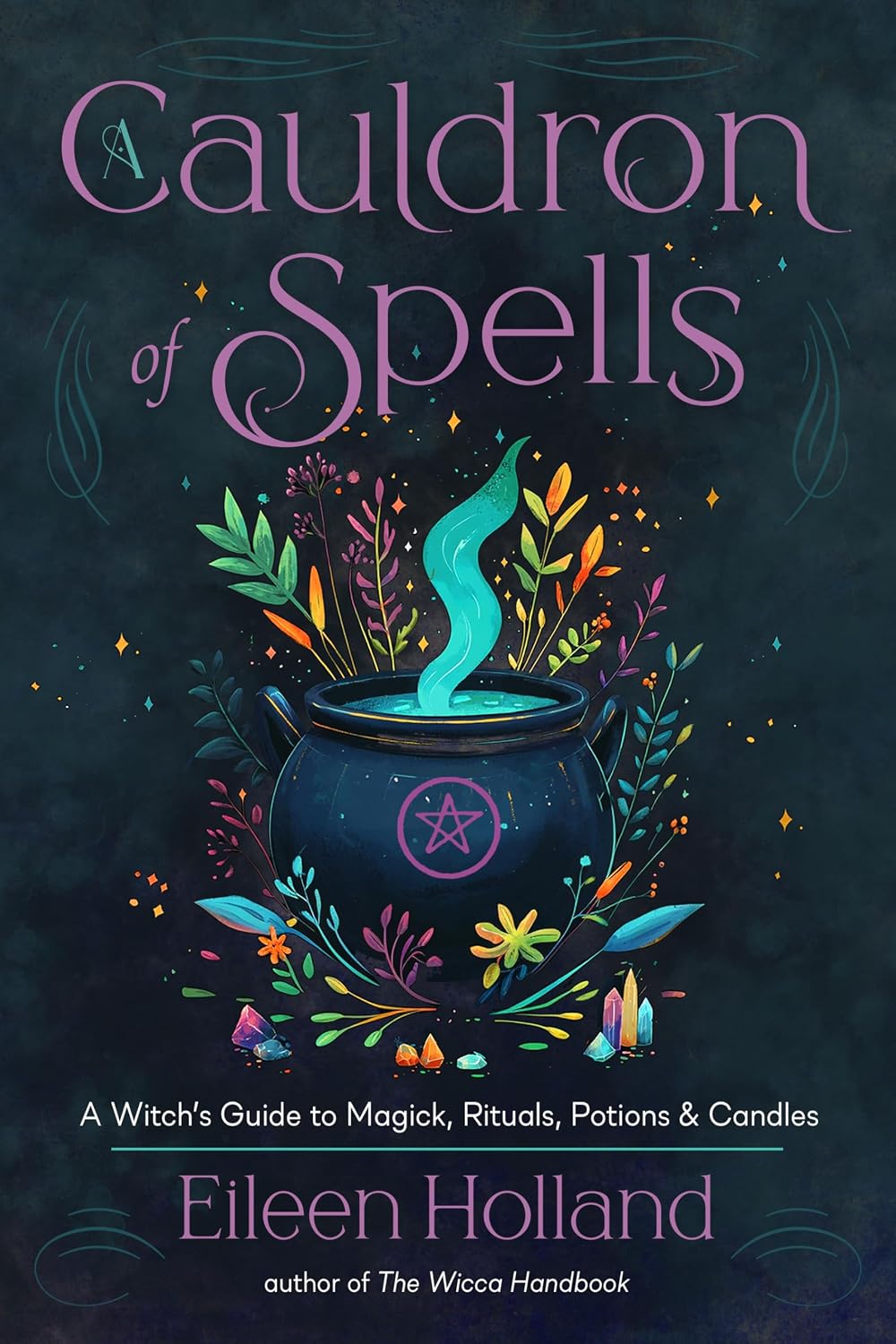
A Cauldron of Spells: A Witch’s Guide to Magick, Rituals, Potions & Candles
by Eileen Holland
Weiser Books, 2026
Click here to purchase: https://redwheelweiser.com/book/a-cauldron-of-spells-9781578639045/
Reviewed By Katrina Rasbold
There are books about Witchcraft that are intended to explain what Witches believe, books designed to explore history or theology, and books that spend a great deal of time telling us how to become Witches. Then there are books that assume, sooner rather than later, we would actually like to do something. Eileen Holland’s A Cauldron of Spells belongs firmly in the latter category.
Originally published in 2004 as Spells for the Solitary Witch, this new Weiser Books edition returns Holland’s practical collection of spellcraft to print under a new title. Holland, who died in 2019, was a solitary eclectic Witch, Wiccan High Priestess, poet, and author whose other works include The Wicca Handbook, A Witch’s Book of Answers, and The Spellcaster’s Reference. Her experience shows here, not because she makes the Craft unnecessarily complicated, but because she doesn’t.
The premise is refreshingly straightforward. This is a working spellbook primarily designed for the solitary practitioner, containing eighty-seven spells and incorporating candle magick, knot magick, sympathetic and herbal magick, charms, poppets, mojo bags, spell bottles, potions, talismanic work, invocation, visualization, and more.
That breadth could easily have produced a scattered collection. Instead, Holland organizes the book according to the kinds of circumstances that actually send people looking for magick: inner work; goals, hopes, and wishes; love; life enhancement; and problem solving. These are followed by sections devoted to magickal candle gardens and tea potions, with a glossary of deity names and an index of spells and potions rounding out the book. It is an eminently usable arrangement.
Holland begins with enough foundational material to allow a relatively inexperienced practitioner to understand what she is asking them to do without turning the first third of the book into Witchcraft 101. Experienced Witches can move through this material quickly and get to work; newer practitioners receive explanations of correspondences, invocation, intent, raising and grounding power, sacred space, and other basic concepts necessary to understand the mechanics behind the spells. Holland also explicitly encourages experienced practitioners to adapt her workings or use them as inspiration for creating their own.
That last point is important. A good spellbook should not feel like a cookbook in which changing one ingredient ruins the cake. Magick is responsive, personal, and necessarily adaptable. Holland provides structure without making the practitioner a prisoner of it.
She is also admirably practical about the relationship between magick and mundane action. A spell for employment does not replace sending résumés and going to interviews. A goal spell does not excuse us from doing the work required to reach the goal. Holland repeatedly places magick beside practical action rather than presenting it as a substitute for it. This is the kind of grounded instruction that serves beginning practitioners particularly well.
The spells themselves range from the deeply personal to the wonderfully ordinary. There is work for acceptance, release, personal power, love, prosperity, protection, wishes, peace, uncrossing, healing situations, home blessing, sleep, creativity, courage, friendship, and countless other circumstances. There is even a spell for computer repair—although Holland sensibly tells us to run the computer’s diagnostic program first.
That little detail captures something I particularly enjoy about Holland’s approach. The sacred and the ordinary do not occupy separate universes. Magick belongs in the house, the kitchen, the workplace, the troubled moment, the hopeful moment, and apparently beside the computer when the infernal thing refuses to cooperate.
Some of the most charming material comes when Holland brings magick directly into daily living. A Seven Blessings Bouquet Garni turns herbs destined for a simmering meal into a vehicle for health, happiness, love, prosperity, peace, protection, and good fortune. The tea potion section similarly transforms the familiar act of making tea into intentional ritual, using the four elements already present in boiling water, herbs, heat, and steam. Holland suggests making the preparation itself something special—using the good china and linens, slowing down, and allowing an ordinary cup of tea to become ceremony.
That may be where A Cauldron of Spells is at its best. It quietly reminds us that a magickal life is not necessarily constructed from increasingly elaborate ritual. Sometimes it comes from recognizing the ritual already waiting inside the things we do.
I was also intrigued by Holland’s “Magickal Candle Gardens,” in which groups of candles become evolving representations of intentions and concerns. These can encompass ambition, compassion, thanksgiving, morning and evening practice, or even concerns for the wider world. The concept is simple, expandable, and particularly suited to solitary practitioners who enjoy maintaining ongoing altar work rather than repeatedly constructing individual workings from scratch.
Readers familiar with contemporary Witchcraft literature will recognize much of the underlying territory in this book: correspondences, candle colors, herbs, lunar timing, sympathetic action, deity invocation, visualization, and intentional energy work. That familiarity is not a weakness. Holland’s accomplishment lies in taking a broad vocabulary of established magical techniques and arranging it into something accessible, flexible, and immediately useful. The experienced practitioner can raid it for ideas; the newer Witch can follow the workings more closely until experience teaches where and how to improvise.
Holland also makes her ethical position clear. Consent matters. Responsibility matters. Environmental consequences matter. She cautions against working magick for people without their permission and explicitly warns readers never to secretly administer a potion to another person. Whatever one’s personal magical ethics may be, there is never much doubt about Holland’s.
Perhaps that is why this collection has aged as well as it has. More than twenty years after its original publication, A Cauldron of Spells remains a useful working book rather than merely an artifact of an earlier era of Witchcraft publishing. It comes from a seasoned practitioner who understands that people looking for a spell usually have a reason for looking for one. They want to change something. Holland meets them there.
A Cauldron of Spells is especially well suited to solitary Witches, newer practitioners ready to move from reading about magick into actually practicing it, and experienced spellcasters who enjoy browsing other Witches’ workings for inspiration. It is approachable without being empty, structured without being rigid, and broad enough that most readers will find something they can carry from its pages directly to the altar, kitchen, candle table, garden—or malfunctioning computer.
Sometimes the most useful magical book isn’t the one that reinvents the Craft. It is the one that makes you want to practice it.
Want to join the conversation about this blog post? Go to the Green Egg Forum and scroll for the forum post that relates to this article
 As Editor of the Green Egg Blog, Katrina Rasbold weaves ancient wisdom into the complexities of modern life, fostering a space for deep inquiry and magical growth. Katrina is the editor of Green Egg Magazine, a priestess, author, and co-creator of the CUSP path, working from the crossroads of tradition and transformation. She owns and operates Crossroads Occult with her husband, Eric, offering a sanctuary for those seeking mentorship, quality handmade magical items, and authentic craft. Discover her full body of work at www.katrinarasbold.com.