The publishing world moves quickly, and even good books can disappear from view once the excitement surrounding their release has passed. For this edition of The Pagan Bookshelf, we are stepping away from the newest arrivals and reaching back a little farther for two Moon Books titles that deserve another look. Robin Herne’s Pantheon: The Egyptians was published in 2021, followed by Halo Quin’s Crimson Craft in 2023, but neither book has lost its relevance simply because newer titles have since crowded onto the shelves. Sometimes the best addition to our reading list is not the book everyone is talking about right now, but the one we somehow missed the first time around.
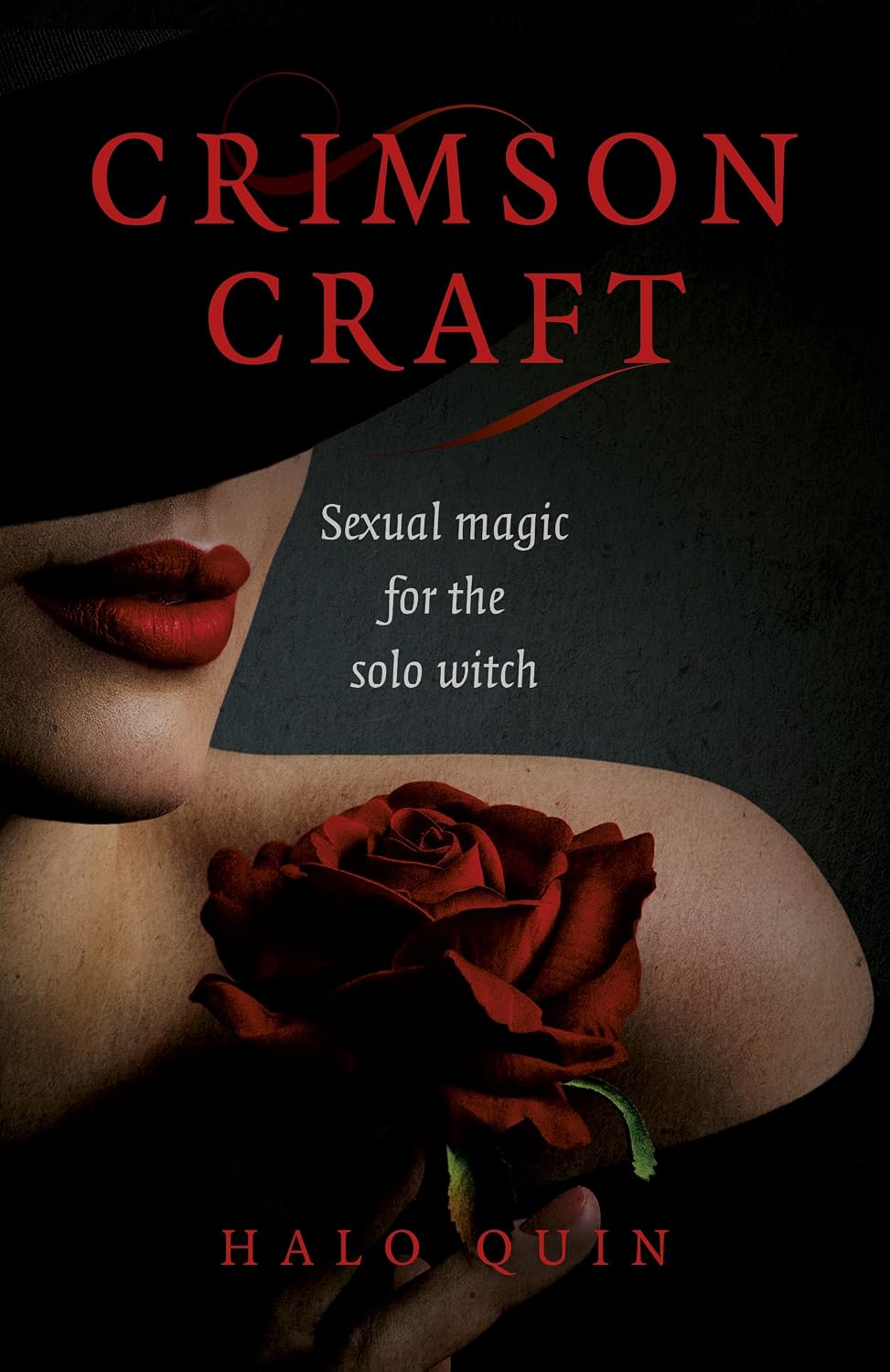
Crimson Craft: Sexual Magic for the Solo Witch
By Halo Quin
Moon Books, 2023
Link to purchase: https://www.collectiveinkbooks.com/moon-books/our-books/crimson-craft-sexual-magic-solo-witch
Reviewed By Katrina Rasbold
Sex magic has an unfortunate habit of being treated as either scandalous, sensational, or so heavily wrapped in esoteric language that the actual human being practicing it disappears somewhere beneath the symbolism. Halo Quin’s Crimson Craft: Sexual Magic for the Solo Witch takes a very different approach. This is a book about erotic magic, certainly, but it is just as much about embodiment, pleasure, self-possession, healing, devotion, consent, and learning to inhabit one’s own life more fully.
Quin describes the book as a guide to solo sexual magic, intended to help the practitioner explore the erotic self and work with the magical power of eros through pleasure and embodied presence. The progression is carefully structured: ethics and safety come first, followed by the Divine Erotic and Red Witchcraft, foundational magical practices, solo erotic magic, glamour, spellcasting, devotional work with deities and archetypes, and finally an exploration of kink, BDSM, and taboo before arriving at the crossroads of whatever comes next. That order matters because Crimson Craft is not simply a collection of techniques for generating magical power through orgasm. Quin is interested in something much larger.
At the center of the book is what they call the Divine Erotic, or eros: not sexuality alone, but the life force expressed through pleasure, beauty, desire, sensuality, creativity, connection, and the experience of being fully alive in a body. Sexual pleasure is one manifestation of that power, but so are music, fragrance, touch, beauty, rest, delight, and those moments when we suddenly remember that existence itself can feel delicious. That broader understanding keeps the book from becoming narrowly focused on sexual technique.
Quin’s greatest strength is the insistence that erotic power belongs first to the person inhabiting the body.
Sex is not presented as something owed, required, performed for another person, or necessary to spiritual completeness. In fact, Quin is explicit that a person need not desire or engage in sexual activity to be whole. What matters is the ability to reclaim a healthy relationship with one’s own embodied nature without shame dictating the terms.
From that foundation emerges the Red Witch: not another rigid category of Witchcraft, but a useful symbol for the witch who regards body, passion, and pleasure as sacred and refuses to surrender ownership of them merely because polite society becomes uncomfortable with the subject. Quin is particularly interested in healing the familiar Western split between flesh and spirit, challenging the assumption that the body is somehow spiritually inferior to the mind or soul. There is something quietly radical in that proposition.
Many religious traditions have taught people to transcend the body, control it, distrust it, conceal it, punish it, or patiently endure it. Crimson Craft asks instead: what if the body is not an obstacle to spiritual experience, but one of our most immediate ways into it?
Importantly, Quin does not confuse reclamation with recklessness. Consent, ethics, safety, self-awareness, and personal responsibility are established before the reader is invited very far into the work. The principles of Safe, Sane, and Consensual are introduced early, along with repeated reminders that sexual magic may encounter old wounds and that magic is not a substitute for therapy. Readers are repeatedly encouraged to move slowly, seek appropriate support, and decline any exercise that is not safe or right for them.
I particularly appreciated those recurring self-love check-ins. They prevent the book from becoming an escalating series of magical challenges in which progress is measured by how far one is willing to push. Sometimes the appropriate magical act is noticing what you need, getting a glass of water, stepping away, listening to music, going outside, or simply being kind to yourself. That gentleness gives the more adventurous material a responsible foundation.
The solo practices eventually expand into spellcraft, glamour, devotion, archetypal work, and relationships with deities associated with love, sex, passion, and erotic power. Quin draws a useful distinction between archetypes and deities without insisting that readers adopt one particular theology. Gods may be encountered as independent beings, archetypal forces, poetic realities, psychological experiences, or something more difficult to categorize. The invitation is to experience first and determine what that experience means for yourself.
The book is also intentionally inclusive around gender and sexuality. Quin identifies as a non-binary queer woman and specifically rejects the idea that sex magic must depend upon a rigid masculine/feminine polarity. Gendered energies and deities remain available to those who find them meaningful, but they are part of a larger spectrum rather than compulsory metaphysical machinery.
The chapter on kink and BDSM could easily have become provocative for the sake of being provocative. Instead, it is one of the clearest extensions of the book’s larger philosophy. Quin discusses kink as a possible arena for self-acceptance, ecstatic experience, trance, and exploration of power while repeatedly returning to informed consent, negotiation, boundaries, and risk awareness.
No path is prescribed as universally desirable. That may be one of the most important qualities of Crimson Craft. Quin invites constantly but rarely commands.
By the closing ritual, the reader arrives at a crossroads rather than a destination. The work is framed as the beginning of a relationship with one’s own embodied power rather than completion of a curriculum.
This is not a book about using sexuality as one more magical tool. It is a book about recognizing pleasure, embodiment, desire, and self-love as parts of the sacred life of the Witch.
Crimson Craft is thoughtful, warm, practical, inclusive, and considerably more tender than its subject matter might lead some readers to expect. It manages to discuss sexuality without becoming lurid, healing without promising miracles, and personal power without forgetting responsibility.
For practitioners interested in sex magic, it offers an unusually strong foundation. For those more interested in embodiment, self-love, devotional practice, or reclaiming pleasure from shame, there is just as much here.
Halo Quin ultimately offers the reader a collection of keys rather than a single door. The magic begins with deciding which one you are ready to turn.
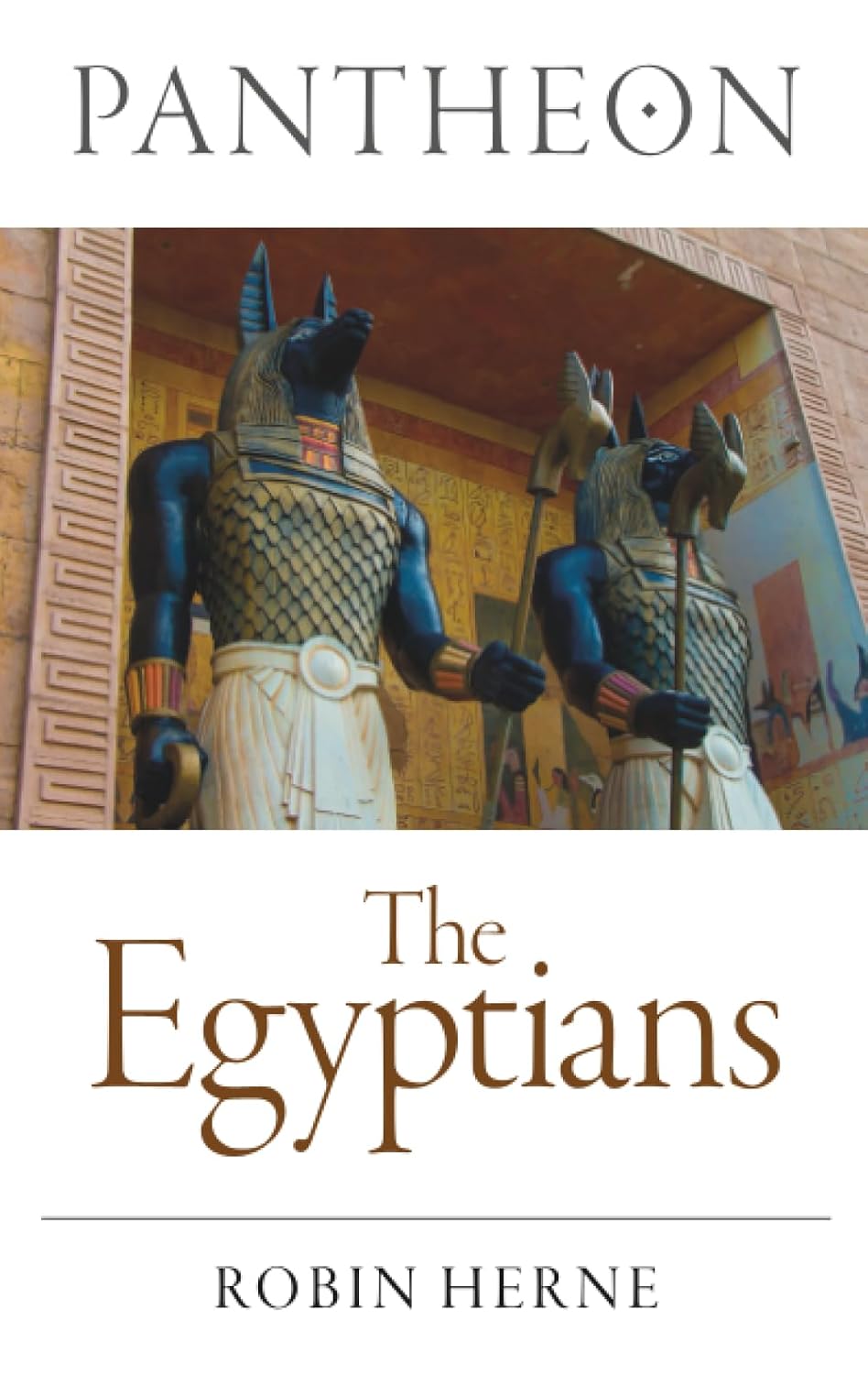
Pantheon: The Egyptians
By Robin Herne
Moon Books, 2021
Link to purchase: https://www.collectiveinkbooks.com/moon-books/our-books/pantheon-egyptians
Reviewed By Katrina Rasbold
Ancient Egypt presents a particular challenge to modern Pagans. We inherit thousands of years of mythology, ritual, theology, sacred imagery, magical practice, and devotional tradition from a culture profoundly different from our own, and then face the uncomfortable question of what, exactly, we are supposed to do with it. Robin Herne’s Pantheon: The Egyptians meets that question directly.
This is not merely a catalogue of Egyptian gods, nor is it an attempt to reconstruct ancient religion with impossible precision. Herne’s larger project is to give the reader enough historical, mythological, philosophical, ethical, and practical context to begin forming a meaningful relationship with Kemetic ideas and the Netjeru without pretending that a twenty-first-century practitioner can simply step back into ancient Egypt unchanged. That balance is the book’s greatest strength.
Herne is clear from the outset that he is dealing with an enormous span of history and cannot cover everything. He therefore focuses on giving enough cultural background to place the mythology and practice in context, while also distinguishing historical material from his own Unsubstantiated Personal Gnosis when it appears. That honesty matters. Pagan writing can become confusing very quickly when archaeology, later interpretation, and personal spiritual experience are presented as though they all carry the same evidentiary weight. Here, they do not.
At the same time, Herne is not interested in turning the gods into museum pieces. His discussion of myth is particularly effective because he treats mythology as something more sophisticated than either literal history or primitive science. Drawing on the distinction between logos and mythos, he reminds us that one kind of truth asks what happened, while another asks what something means. Ancient cultures did not always divide those questions as sharply as modern readers do, and Herne gives the myths room to function as repositories of spiritual and philosophical meaning without requiring us to treat every story as documentary fact. That makes the book accessible to both the historically minded reader and the practicing Pagan.
Herne is equally thoughtful about the problems of importing ancient practice wholesale into modern life. The Egyptian religious calendar, for example, was intimately connected to the Nile and the heliacal rising of Sirius. A modern practitioner in Canada, Australia, Britain, or the United States is standing beneath a different sky and beside different rivers. Herne’s suggestion is refreshingly Pagan: learn your own landscape and skyscape. Honor where you actually live rather than romanticizing a homeland thousands of miles away. That is one of the strongest ideas in the book.
Honoring an ancient tradition does not require pretending we live in an ancient place.
The same practical intelligence appears in the chapters on ritual and daily practice. Herne acknowledges that modern practitioners have jobs, families, health limitations, changing schedules, and living spaces that may not accommodate elaborate devotional work. Even a five- or ten-minute daily prayer, he argues, can help create the rhythm of spiritual practice. That approach keeps Pantheon: The Egyptians from drifting into historical reenactment.
Herne also makes an admirable effort to complicate easy assumptions about ancient religion. The chapter on ethics and philosophy is a good example. Ancient Egyptian morality valued order, continuity, social stability, and respect for established structures, but Herne does not ask the modern reader to accept those values uncritically. He explicitly points out that many freedoms we now consider essential came about because people challenged existing systems rather than preserving them. Ancient wisdom, in his hands, becomes something to engage with rather than obey blindly. That distinction is important.
The treatment of ma’at and isfet likewise moves beyond simplistic ideas of good and evil. Herne presents ma’at as harmony, rightness, order, duty, and relational balance rather than as an exact Egyptian equivalent of Judeo-Christian moral goodness. The concept becomes less about following a list of commandments and more about considering how one participates in the balance or disorder of the world around them.
The later discussion of sekhem is equally compelling. Rather than reducing magical power to spellcraft, Herne considers power in all its forms: persuasion, technology, money, politics, sexuality, argument, social influence, physical force, and magic itself. He asks the reader not merely how they exert power, but what repeated ways of exerting it are shaping them into. That is a far more useful question than “How do I become more powerful?”
When Herne turns to the Netjeru themselves, he avoids the trap of pretending that one fixed ancient Egyptian theology ever existed. Calendars changed. Religious emphases changed. Names, roles, and local forms varied over time. Even the identities and relationships among the gods cannot always be reduced to one tidy system. This refusal to force a vast religious culture into a single neat box gives the book much of its credibility.
It also makes the occasional dry humor particularly welcome. Herne has a gift for slipping a wry aside into dense material just when the reader needs it, preventing what could easily become an intimidating subject from feeling inaccessible.
Pantheon: The Egyptians succeeds because it respects both halves of modern Pagan practice: the responsibility to know where our traditions come from and the necessity of making them live where we are now. It is informed without becoming sterile, practical without becoming formulaic, reverent without becoming unquestioning, and broad enough to give newcomers a substantial foundation while still offering experienced practitioners plenty to reconsider.
This is not a book about preserving Ancient Egypt in amber. It is a book about allowing its gods, ideas, and practices to remain alive.
For readers standing at the threshold of Kemetic practice, Robin Herne offers an excellent doorway. For those already inside, he offers something perhaps even more valuable: reasons to look again at what they are doing, why they are doing it, and how an ancient spiritual inheritance might continue speaking meaningfully in a very modern world.
Want to join the conversation about this blog post? Go to the Green Egg Forum and scroll for the forum post that relates to this article
 As Editor of the Green Egg Blog, Katrina Rasbold weaves ancient wisdom into the complexities of modern life, fostering a space for deep inquiry and magical growth. Katrina is the editor of Green Egg Magazine, a priestess, author, and co-creator of the CUSP path, working from the crossroads of tradition and transformation. She owns and operates Crossroads Occult with her husband, Eric, offering a sanctuary for those seeking mentorship, quality handmade magical items, and authentic craft. Discover her full body of work at www.katrinarasbold.com.