One of the pleasures of exploring new magical publications is discovering the different ways authors and artists invite us to engage with the mysteries. This week, The Pagan Bookshelf features two offerings from Red Wheel/Weiser: Ankh: The Shape of Life and Magic from the Midnight Garden. The first explores the enduring symbolism and spiritual significance of one of ancient Egypt’s most recognizable sacred symbols, while the second is an oracle deck that draws upon the imagery and enchantment of the botanical world. One invites us to deepen our understanding through reading, while the other offers a more intuitive, interactive experience through the cards. Together, they remind us that magical exploration can take many forms, and sometimes the most interesting discoveries come from trying something a little different.
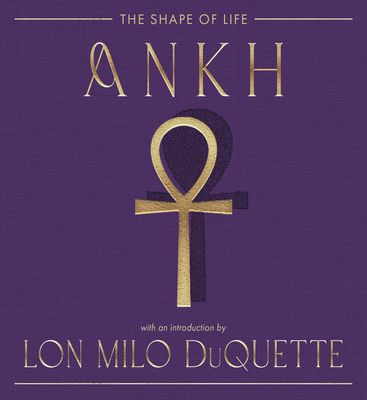
Ankh: The Shape of Life
By the Editors of Weiser Books, with an Introduction by Lon Milo DuQuette
Weiser Books, 2026
ISBN: 978-1578639427
https://redwheelweiser.com/book/ankh-9781578639427/
Reviewed by Katrina Rasbold
Few symbols are as immediately recognizable as the ankh. Its distinctive loop rising above a cross has appeared on Egyptian monuments, in museum collections, on jewelry, and in the hands of modern spiritual practitioners. Even people who know very little about ancient Egypt generally recognize the symbol and associate it with life. What is less commonly understood is how the ankh acquired its significance, how its meaning has evolved, and why it continues to appeal to people whose spiritual traditions are separated from ancient Egyptian religion by thousands of years.
Ankh: The Shape of Life, published by Weiser Books with an introduction by Lon Milo DuQuette, explores these questions in a compact, illustrated volume combining historical background, symbolic interpretation, and practical magical applications. Originally published in 2007 as Ankh: The Key of Life, the book returns in a 2026 edition that offers an accessible introduction to one of the world’s most enduring sacred symbols.
DuQuette opens with a personal recollection of encountering the ankh in a Los Angeles bookstore in 1966. At the time, the symbol was enjoying renewed popularity among members of the counterculture, appearing alongside peace signs and other emblems of spiritual exploration. The young DuQuette purchased one after being told that it represented free love. It’s an amusing anecdote, and a particularly appropriate introduction to a book exploring how sacred symbols acquire new associations as they travel through different cultures and generations.
The first portion examines the symbolic foundations of the ankh, beginning with its two primary components, the circle and the cross. The authors explore the cross as an expression of intersection, opposition, and the meeting of different forces, while the circle represents continuity, infinity, and wholeness. Their union becomes a visual expression of life itself, bringing apparently opposing principles together in a single meaningful form.
This discussion extends beyond ancient Egypt, drawing comparisons with religious and cultural symbolism from several traditions. Readers who enjoy examining recurring patterns in sacred imagery will find these connections interesting, particularly when approached as opportunities for symbolic contemplation rather than evidence that similar designs necessarily share identical origins.
The book becomes especially engaging when it turns to the ankh’s place in ancient Egyptian culture. Its appearances in religious art, funerary imagery, and the hands of deities demonstrate its close association with life, vitality, and divine power. The familiar image of a deity presenting an ankh to a ruler, for example, expresses more than a general wish for good health. It communicates the relationship between divine authority and the continuation of life.
The accompanying illustrations are particularly valuable. Examples of Egyptian artwork and other historical imagery allow readers to see how the symbol appeared within its original cultural setting. These visual references help connect the familiar ankh worn as jewelry or displayed on modern altars with its much older religious significance.
The book also follows the ankh into later history and contemporary culture, exploring its continued presence in religious symbolism, personal adornment, and modern spiritual movements. Its meanings have expanded and shifted, sometimes becoming detached from their original contexts, yet the fundamental association with life has remained remarkably persistent. That continuity is fascinating in itself, especially considering the tremendous cultural changes that have occurred since the symbol first appeared.
The second half moves into practical magical applications. Readers are introduced to methods of consecrating an ankh, using it as an amulet or talisman, incorporating it into altar arrangements, and working with it as a focus for personal intention. The consecration exercise employs representations of the four elements, spoken affirmations, and visualization, providing an accessible method for practitioners who wish to empower an ankh for their own magical work.
Additional material explores the significance of different metals and the incorporation of ankhs into prayer beads, including gemstone correspondences that can inform the creation of devotional or protective objects. The final practical chapter suggests using an ankh necklace as a pendulum for divination and maintaining a journal to evaluate the results. These are familiar techniques for experienced Witches, but they offer newcomers several approachable ways to develop a more personal relationship with the symbol.
It is worth recognizing that the book combines historical information with contemporary esoteric interpretation. Its modern consecration methods, crystal correspondences, and divination exercises should not be mistaken for documented reconstructions of ancient Egyptian religious practices. Readers seeking a comprehensive Egyptological study will naturally want more specialized sources. Within its intended scope, however, the book provides an appealing introduction that encourages further curiosity.
For Pagan and Witchcraft practitioners, Ankh: The Shape of Life offers an opportunity to reconsider an object that has become almost commonplace in metaphysical shops and on personal altars. Its illustrations, manageable length, and practical suggestions make it particularly welcoming to beginners, while readers with more experience may enjoy revisiting the symbolism behind a familiar magical emblem.
Perhaps the most compelling aspect of the ankh is its extraordinary endurance. Civilizations have risen and fallen, religions have transformed, and countless symbols have faded into obscurity, yet this simple combination of a loop and cross continues to communicate something recognizable about humanity’s desire for life, renewal, and connection. Ankh: The Shape of Life reminds us that even our most familiar sacred symbols have stories worth exploring, and that understanding those stories can enrich the meaning we bring to our own spiritual practices.
Magic from the Midnight Garden: Dark Beauty, Mystery, and Wisdom
Created by the Editors of Red Wheel/Weiser, featuring botanical artwork by Mary Delany
Red Wheel/Weiser, 2026
ISBN: 978-1-59003-594-8
https://redwheelweiser.com/book/magic-from-the-midnight-garden-9781590035948/
Reviewed by Katrina Rasbold
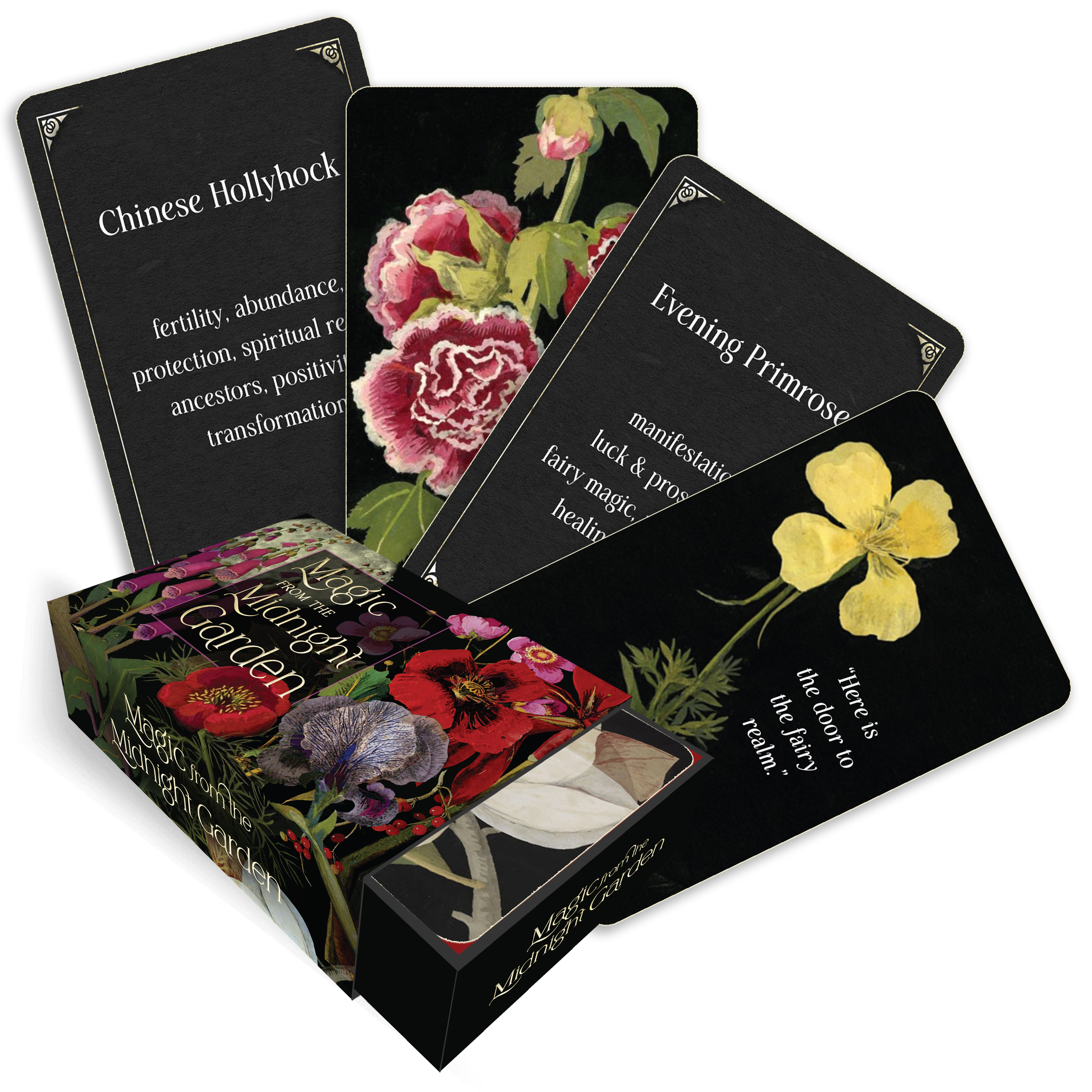
There is something wonderfully appealing about a garden that comes alive after dark, particularly when its inhabitants have a few secrets to share. Magic from the Midnight Garden is a collection of 36 botanical inspiration cards exploring the magical associations of flowers, including themes of transformation, protection, remembrance, spiritual awareness, and our relationship with the unseen world. It’s a small deck with an unexpectedly elegant presentation.
The artwork is immediately captivating. Against nearly black backgrounds, flowers emerge in rich shades of pink, crimson, white, and violet, their petals and foliage rendered in remarkable detail. The illustrations come from the work of Mary Delany, an eighteenth-century British artist celebrated for her intricate botanical compositions made from carefully cut pieces of colored paper. Her flowers have a depth and delicacy that suit the deck’s mysterious atmosphere beautifully. I particularly appreciate that the botanical subjects remain recognizable rather than disappearing into fanciful interpretations. The contrast between the darkness of the backgrounds and the vivid botanical images gives the collection a distinctive character.
Each card has two distinct faces. One features a flower illustration accompanied by a short first-person statement, such as “I am the bridge between worlds” or “I am life within death.” The reverse identifies the plant and provides several magical or spiritual correspondences. Southern Magnolia, for example, represents dignity, nobility, perseverance, and pride, while Asphodel Lily addresses death, remembrance, the transition of the soul, protection, solace, and mourning. Damask Rose offers compassion, empathy, self-love, emotional healing, and spiritual opening. These are useful associations for practitioners who enjoy incorporating botanical symbolism into their magical work.
I particularly like that the cards can be approached from either direction. The illustrated side offers an intuitive message for contemplation, while the reverse provides specific correspondences that might inform meditation, spellwork, or personal reflection. A practitioner exploring ancestral connections might be drawn to Asphodel Lily, while someone seeking comfort during a difficult period might appreciate the associations of Winter Cherry. The cards could also serve as prompts for journaling, a daily focus for magical intention, or a way to select floral symbolism for a particular working. Their simplicity leaves considerable room for individual interpretation.
The physical presentation deserves particular mention. The cards arrive in an attractive matchbox-style sliding box, and their gold-gilded edges provide a lovely contrast to the predominantly black backgrounds. They are approximately bridge-sized, making them especially comfortable for smaller hands. The card stock is substantial without feeling stiff or cumbersome, and the cards shuffle easily. Although this is an inexpensive deck, it certainly doesn’t feel flimsy or cheaply made. The gilding gives the entire collection a polished appearance that I wouldn’t necessarily expect at this price.
There is no accompanying guidebook, but the essential information is printed directly on the cards, making the collection pleasantly self-contained. Rather than offering an elaborate divination system with prescribed spreads and interpretations, the deck invites readers to explore its imagery and correspondences in ways that suit their own practices. Someone interested in extensive botanical history may wish to consult additional resources, but that is not really the purpose of this collection. Its appeal lies in making floral symbolism immediately accessible, whether for contemplation, inspiration, or magical work.
At a suggested retail price of $12.95, Magic from the Midnight Garden is an appealing addition to a magical library, particularly for practitioners who enjoy working with flowers and their symbolic associations. It would also make a lovely small gift for a Witch, gardener, or anyone who appreciates botanical art. The illustrations are beautiful enough to reward contemplation on their own, and the combination of intuitive statements and practical correspondences gives the cards several possible uses. Sometimes a single blossom and a few carefully chosen words are quite enough.
Want to join the conversation about this blog post? Go to the Green Egg Forum and scroll for the forum post that relates to this article
 As Editor of the Green Egg Blog, Katrina Rasbold weaves ancient wisdom into the complexities of modern life, fostering a space for deep inquiry and magical growth. Katrina is the editor of Green Egg Magazine, a priestess, author, and co-creator of the CUSP path, working from the crossroads of tradition and transformation. She owns and operates Crossroads Occult with her husband, Eric, offering a sanctuary for those seeking mentorship, quality handmade magical items, and authentic craft. Discover her full body of work at www.katrinarasbold.com.