
One of the great pleasures of Pagan spirituality is discovering how many different ways people have understood and approached the divine. This week, The Pagan Bookshelf features two titles from Moon Books’ Pagan Portals series: Maria Lionza and The Divine Feminine. The first introduces readers to a fascinating spiritual tradition rooted in Venezuela, while the second considers the broader presence and significance of feminine divinity. Together, they offer an opportunity to venture beyond familiar mythologies, explore different cultural expressions of the sacred, and perhaps reconsider some of our assumptions about what Goddess spirituality looks like.
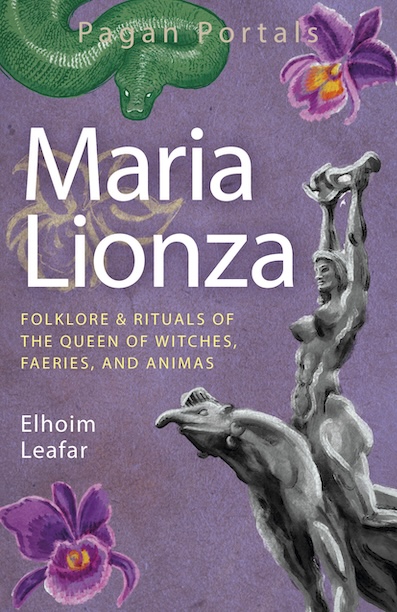
Pagan Portals: Maria Lionza — Folklore & Rituals of the Queen of Witches, Faeries, and Animas
By Elhoim Leafar
Moon Books, 2026
ISBN: 978-1-917991-03-2
https://www.collectiveinkbooks.com/moon-books/our-books/pagan-portals-maria-lionza
Reviewed by Katrina Rasbold
One of the great pleasures of exploring magical traditions beyond our own is discovering how differently other cultures understand the relationship between humanity, divinity, and the spirit world. Sometimes the familiar elements are all there—candles, incense, offerings, healing, divination, and communication with the dead—but the spiritual framework surrounding them is something entirely different. In Pagan Portals: Maria Lionza, Elhoim Leafar introduces readers to one of Venezuela’s most fascinating and culturally significant spiritual figures, a goddess whose identity encompasses indigenous heritage, religious syncretism, sorcery, nature worship, and a remarkable community of spirits.
María Lionza is not a deity who fits neatly into the familiar categories of contemporary Western Paganism. She is simultaneously a queen of witches, a protector of the natural world, a mother goddess, a sovereign of spirits, and the central figure in a living Venezuelan religious tradition. Leafar’s considerable affection for her is apparent throughout the book, but his purpose extends beyond personal devotion. He wants readers to understand the cultural and historical circumstances that produced this extraordinary spiritual tradition and the people who continue to practice it.
The book begins by examining the development of María Lionza’s veneration through the blending of indigenous Venezuelan beliefs, African religious influences, European Catholicism, and Spiritism. This religious synthesis is particularly interesting because it challenges the assumption that spiritual traditions must maintain rigid boundaries to preserve their identities. Devotees may invoke Catholic saints and angels while honoring indigenous spirits, consulting mediums, and performing rituals rooted in the natural world. These practices coexist within a spiritual structure that has developed its own distinctive character.
Central to that structure are the Three Powers: María Lionza, the indigenous leader Guaicaipuro, and Negro Felipe, a figure associated with Venezuela’s struggle for independence. Together, they represent important dimensions of the country’s cultural heritage. Leafar also introduces the spiritual courts, communities of spirits whose identities and responsibilities reflect the complex influences within Venezuelan religious life. For readers accustomed to working with ancestors, guides, and other spiritual intelligences, these relationships offer an intriguing comparison without being interchangeable with Western systems.
María Lionza herself emerges through several overlapping identities. Leafar explores her association with the indigenous figure Yara, her relationship with forests and mountains, her sovereignty over witches and faeries, and her role as a warrior goddess. Her most recognizable artistic representation depicts her riding a tapir, holding a female pelvic bone above her head. The image is striking, and Leafar’s discussion of the tapir’s ecological and spiritual significance helps readers understand why this unusual animal occupies such an important position in her iconography.
I especially appreciated the attention given to María Lionza’s relationship with the land. Sorte Mountain in Venezuela’s Yaracuy state is not merely a picturesque backdrop for religious observances. It is a sacred landscape where devotees gather, undertake pilgrimages, and participate in ceremonies intended to bring them into direct contact with the spirits. Leafar describes the annual celebrations, including the Baile de Candela, or fire dance, and the trance practices through which mediums are understood to receive spiritual presences. These descriptions convey a tradition that is communal, embodied, and very much alive.
Another significant aspect of the book is its discussion of gender and sexuality. Leafar presents María Lionza as a particularly welcoming spiritual presence for queer practitioners and describes the tradition’s capacity to accommodate people whose identities might be marginalized elsewhere. He connects this inclusiveness with the goddess’s sovereignty, her resistance to restrictive social expectations, and the diverse community of practitioners who honor her. This is an important dimension of his presentation, although readers should recognize that the experiences and attitudes of individual devotees within any living religious tradition will naturally vary.
The latter portion of the book turns toward practical devotion and magic. Leafar offers instructions for establishing a sacred portal, preparing perfumes and incense, working with candles, and creating a devotional relationship with María Lionza. He discusses ritual tools, offerings, symbols, and magical practices appropriate to different levels of experience. Readers interested in hands-on work will find considerably more practical material here than the book’s relatively compact size might suggest.
What makes these instructions especially valuable is their placement within the larger cultural discussion. A candle ritual means something different when understood as part of an ongoing relationship with a goddess and her spiritual courts rather than as an isolated technique borrowed from an unfamiliar tradition. Leafar’s explanations encourage readers to approach the work with reverence and an awareness of its origins.
There is, however, an important distinction between learning about a tradition and becoming an initiated or fully trained practitioner within it. Leafar acknowledges the importance of oral instruction, experienced mentors, and the relationships developed through established spiritual communities. The book provides an accessible introduction and devotional possibilities, but it cannot substitute for the lived experience and instruction that sustain the tradition itself. I consider that an important consideration for anyone inspired to pursue these practices more deeply.
The writing is enthusiastic and frequently lyrical, sometimes to the point of repetition. Certain themes, particularly the goddess’s inclusiveness, the sacredness of nature, and the significance of her annual celebrations, receive more than one explanation. A little tighter editing would have strengthened the presentation, but the repetition does not substantially diminish the information or the author’s evident sincerity.
What I found most rewarding about Maria Lionza is that Leafar does not reduce the goddess to a convenient collection of magical correspondences. He presents her as the heart of a spiritual world with its own history, communities, obligations, and understanding of the sacred. Readers who approach this book expecting another goddess to add to their personal pantheon may discover something much more interesting: an opportunity to appreciate a living tradition on its own terms.
For Pagans, witches, spirit workers, and students of comparative religion, this is an engaging introduction to a spiritual figure who deserves greater recognition beyond Venezuela. Leafar offers a doorway into her world with warmth, devotion, and considerable practical knowledge. Whether readers ultimately feel called to honor María Lionza themselves or simply come away with a deeper appreciation for the richness of Venezuelan spirituality, the journey is well worth taking.
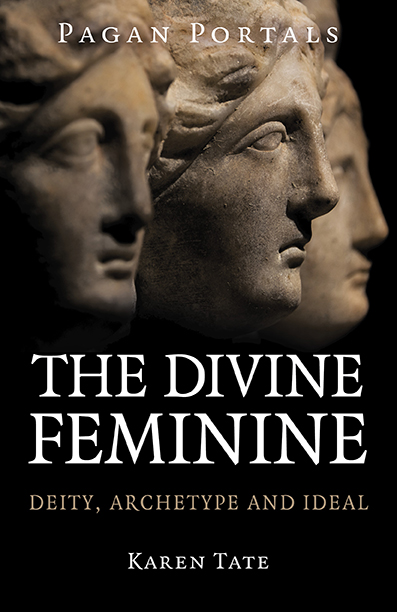
Pagan Portals: The Divine Feminine — Deity, Archetype and Ideal
By Karen Tate
Moon Books, 2026
ISBN: 978-1-917704-34-2
https://www.collectiveinkbooks.com/moon-books/our-books/pagan-portals-divine-feminine
Reviewed by Katrina Rasbold
There is a considerable difference between acknowledging that goddesses existed in ancient religions and recognizing the Divine Feminine as a living spiritual presence with implications for how we understand ourselves and organize our societies. Karen Tate has spent decades exploring that distinction, and in Pagan Portals: The Divine Feminine — Deity, Archetype and Ideal, she brings together three aspects of Goddess spirituality that she considers inseparable: the Goddess as divine being, as psychological archetype, and as a model for how humanity might live.
Tate is hardly a newcomer to this conversation. An author, speaker, and longtime advocate for Goddess spirituality, she approaches the subject with the enthusiasm of someone who has devoted a substantial portion of her life to recovering women’s sacred history. Her perspective is unmistakably feminist, and she makes no pretense of treating the suppression of feminine divinity as an interesting historical curiosity. For Tate, what happened to the Goddess matters because the consequences of that displacement remain visible in our religions, institutions, and cultural assumptions.
The book’s organizing principle is what Tate calls the sacred trident of the Divine Feminine. The first aspect, deity, concerns the Goddess as a genuine object of spiritual reverence rather than merely a figure from mythology. Tate considers prehistoric female figurines, the widespread presence of goddesses in ancient cultures, and the gradual displacement or reinterpretation of feminine divinity as patriarchal religious systems gained prominence. She also discusses the ways Goddess traditions survived through religious symbolism, folk practices, and spiritual movements even when their original contexts changed.
One particularly useful distinction is Tate’s acknowledgment that people understand deity differently. Some approach the Goddess as an independent divine intelligence, others as an expression of universal energy, and still others through a more symbolic or psychological framework. These differences influence whether prayer, offerings, and ritual feel appropriate. Rather than prescribing a single correct answer, Tate invites readers to examine what they believe they are addressing when they invoke the sacred.
Her discussion of worship moves beyond abstract theology into lived practice. Prayer, sacred sexuality, pilgrimage, and personal experiences of being called to Goddess spirituality all receive attention. Tate’s observations are informed by her own devotional life and years of visiting sacred sites. That personal investment gives the material warmth and immediacy, particularly when she describes the significance of encountering places where feminine divinity was once honored.
The most geographically detailed portion of the book explores Goddess traditions in the Middle East, a region commonly associated today with Judaism, Christianity, and Islam. Tate takes readers through locations in Iraq, Israel, Jordan, Saudi Arabia, and Syria, discussing sites associated with Inanna, Ishtar, Al-Lat, and other manifestations of feminine divinity. The temple of Ishtar, ancient Uruk, Jerash, and Petra are among the places considered. Her purpose is not simply to identify forgotten goddesses but to demonstrate how thoroughly religious landscapes can change while retaining traces of earlier sacred relationships.
This material is especially engaging because it encourages readers to reconsider familiar places through a different historical lens. Sacred geography is rarely as straightforward as the traditions that eventually claim it, and Tate’s interest in the accumulated layers of worship provides an appealing starting point for further investigation. Readers should nevertheless recognize that some of her broader historical interpretations, particularly those concerning prehistoric Goddess-centered societies and the extent of deliberate religious erasure, remain subjects of scholarly disagreement. The book is written from a committed Goddess-spirituality perspective rather than as a neutral archaeological survey.
The second aspect of Tate’s sacred trident is archetype. Drawing upon psychological and mythological understandings of recurring symbolic patterns, she considers how the Divine Feminine functions within the human imagination and collective experience. Her discussion of Isis is particularly relevant here, illustrating how a goddess can remain meaningful across cultural boundaries and changing religious circumstances. For readers who do not necessarily understand goddesses as literal supernatural beings, this section provides another way to engage with feminine sacred imagery without dismissing its emotional or cultural power.
The third aspect, ideal, may be the book’s most important contribution. Tate argues that reverence for the Divine Feminine should influence more than private spiritual practice. Compassion, cooperation, environmental responsibility, social equality, and respect for life are among the values she associates with a more balanced understanding of the sacred. Her argument is that recovering the feminine face of divinity can help challenge systems built around domination, exploitation, and rigid hierarchies.
I found this emphasis especially worthwhile. Pagan spirituality can become so absorbed in the particulars of ritual, correspondences, and divine relationships that we occasionally neglect the question of what our beliefs ask of us once the candles have burned down. Tate insists that Goddess spirituality has an ethical dimension. Honoring the Earth as sacred, for example, ought to have some bearing on how we treat the environment. Recognizing feminine divinity should likewise prompt reflection on how women and other marginalized people are treated in ordinary life.
Tate’s writing is passionate, accessible, and frequently personal. She does not hide her impatience with patriarchy or her conviction that humanity needs a substantial change in direction. Some readers may find her historical generalizations too sweeping or her optimism about a coming cultural transformation more hopeful than demonstrable. Those reservations do not diminish the value of the questions she raises, although they do make the book best approached as an informed spiritual argument rather than an uncontested account of human history.
At its heart, The Divine Feminine asks readers to consider what changes when Goddess is understood not only as someone to worship, but also as a pattern of meaning and a standard against which to measure human behavior. That is a worthwhile question for experienced Goddess devotees and newcomers alike. Karen Tate offers an enthusiastic, thoughtful invitation to explore the feminine sacred in history, personal spirituality, and everyday ethical choices. Her central message is that reclaiming the Goddess is not merely about remembering the past. It is also about deciding what kind of future we intend to create.
Want to join the conversation about this blog post? Go to the Green Egg Forum and scroll for the forum post that relates to this article
 As Editor of the Green Egg Blog, Katrina Rasbold weaves ancient wisdom into the complexities of modern life, fostering a space for deep inquiry and magical growth. Katrina is the editor of Green Egg Magazine, a priestess, author, and co-creator of the CUSP path, working from the crossroads of tradition and transformation. She owns and operates Crossroads Occult with her husband, Eric, offering a sanctuary for those seeking mentorship, quality handmade magical items, and authentic craft. Discover her full body of work at www.katrinarasbold.com.