By Katrina Rasbold
In the half-century since Green Egg first began chronicling the Awakening of Gaia, our community has moved from the shadowy fringes of the “Occult” section to the glittering center of the global marquee. In 2026, you can’t swing a ritual cord without hitting a streaming service featuring a teenage necromancer, a kitchen witch with a podcast, or a reimagined folk-horror deity.
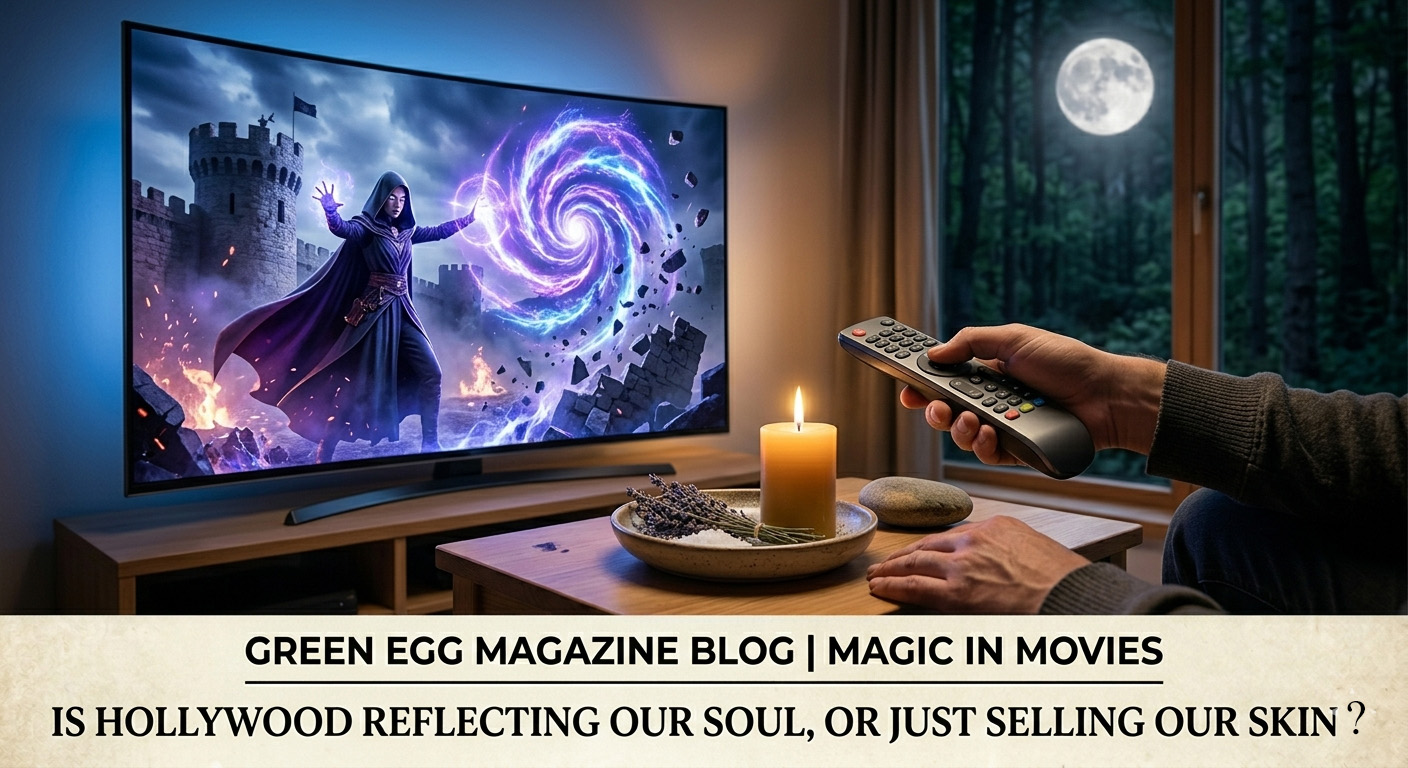
But as the Witchy Aesthetic becomes a billion-dollar industry, we have to ask: Is Hollywood reflecting our soul, or just selling our skin?
As Pagans and Witches, our relationship with the screen is a complex one—a dance between the thrill of being seen and the sting of being distorted.
The Funhouse Mirror: The Negative Tropes
Let’s start with the thorns. For decades, the primary goal of Paganism in media was to serve as a convenient “Other.”
The “Devil in Disguise”
Even in 2026, we still see the lingering ghost of the Satanic Panic. In many horror films, Paganism is used as a shorthand for a cult that lives in the woods and sacrifices tourists to keep the corn growing. While Midsommar was a cinematic masterpiece, it reinforced the “Scary Rural Heathen” trope that makes our actual land-based practitioners look like a threat to the neighborhood.
The Cost of Power
Hollywood loves a monkey’s paw narrative. In shows like The Craft or its modern descendants, magic is almost always depicted as a zero-sum game: if you heal your leg, someone else’s arm must break. This reinforces the idea that magic is “against nature” rather than an inherent part of it. It frames our spirituality as a dangerous shortcut rather than a disciplined path of alignment.
The “Instant Mastery” Problem
In movies, a Witch reads one dusty book and can suddenly levitate or is granted Super Witch talent by virtue of their DNA. In reality, our path is one of doing The Work—years of meditation, study, and failed garden crops. By stripping away the labor, the media turns a sacred tradition into a “superpower,” which leads to a shallow understanding of the Craft among those seeking to join our circles.
The Quickening: The Positive Shifts
It isn’t all hexes and jump-scares. In the last decade, something beautiful has happened. Writers and directors are actually starting to listen to us.
The Return of the Ancestral Voice
We are seeing a rise in “Folk Horror” and period dramas that treat ancient traditions with genuine reverence. Films like The Northman or shows that explore pre-Christian Celtic or Slavic folklore have begun to move away from “evil” and toward accuracy. They show the grit, the sacrifice, and the profound animistic connection our ancestors had with the land.
The Witch as Social Subversive
Modern TV has embraced the Witch as the ultimate symbol of the marginalized soul fighting back. From the feminist reclamations in American Horror Story: Coven to the queer-coded magic in modern fantasy, the “Witch” has become the banner for those who refuse to fit into the exploding patriarchal structure. This aligns perfectly with the Green Egg mission: the Witch is the one who stands at the crossroads of change.
Kitchen Table Magic
Perhaps the most positive shift is the depiction of “casual” magic. Seeing characters light a candle for a loved one, consult the Tarot for clarity, or leave an offering for a house spirit—without the world ending in a CGI explosion—normalizes our daily practice. It shows that the Craft is about meaning, not just fireworks.
The 2026 Reality: The Aesthetic vs. The Altar
As we scroll through our feeds today, we see WitchTok influencers and high-budget fantasy series that look incredible. The cinematography of the Divine Feminine has never been more beautiful.
But there is a danger in being represented by a system that prioritizes the visual over the visceral. If we see the Goddess on a screen but never feel Her in the soil, have we actually gained anything?
The challenge for the modern Pagan is to use the media as a mirror, not a map.
We can enjoy the representation—we can cheer when our symbols are used correctly and roll our eyes when they aren’t—but we must never forget that the “Real” magic is happening outside the frame.
Being Our Own Directors
At Green Egg, we have always been the masters of our own narrative. Whether the media portrays us as hags, heroes, or horrors, our truth remains the same: We are the children of the Earth, and our “show” has been running for thousands of years.
The next time you see a Witch on screen, don’t just look at the special effects. Look for the heart. If it’s there, celebrate it. If it’s missing, turn off the TV, go outside, and write your own story in the dirt.
Which movie or show first made you feel “seen” as a Pagan or Witch? And which one makes you want to throw your remote into a ritual fire? Join the discussion in the Green Egg Forum.
 As Editor of the Green Egg Blog, Katrina Rasbold weaves ancient wisdom into the complexities of modern life, fostering a space for deep inquiry and magical growth. Katrina is the editor of Green Egg Magazine, a priestess, author, and co-creator of the CUSP path, working from the crossroads of tradition and transformation. She owns and operates Crossroads Occult with her husband, Eric, offering a sanctuary for those seeking mentorship, quality handmade magical items, and authentic craft. Discover her full body of work at www.katrinarasbold.com.