Few publishers have embraced the sheer breadth of contemporary Paganism quite like Moon Books, and this week’s Pagan Bookshelf demonstrates just how many directions that breadth can take us. We have dragons and ancient lore, Irish mythology in fresh translation, the enduring presence of Herne the Hunter, and Witchcraft steeped in the color, fragrance, history, and magic of lavender.
These four books range from scholarship and folklore to devotional and practical magical work, but all share an interest in looking more closely at the stories, beings, traditions, and natural allies that continue to shape Pagan practice. Whether your interests run toward Celtic myth, legendary creatures, the wild forest, or the Witch’s garden, there is quite a bit here to explore.
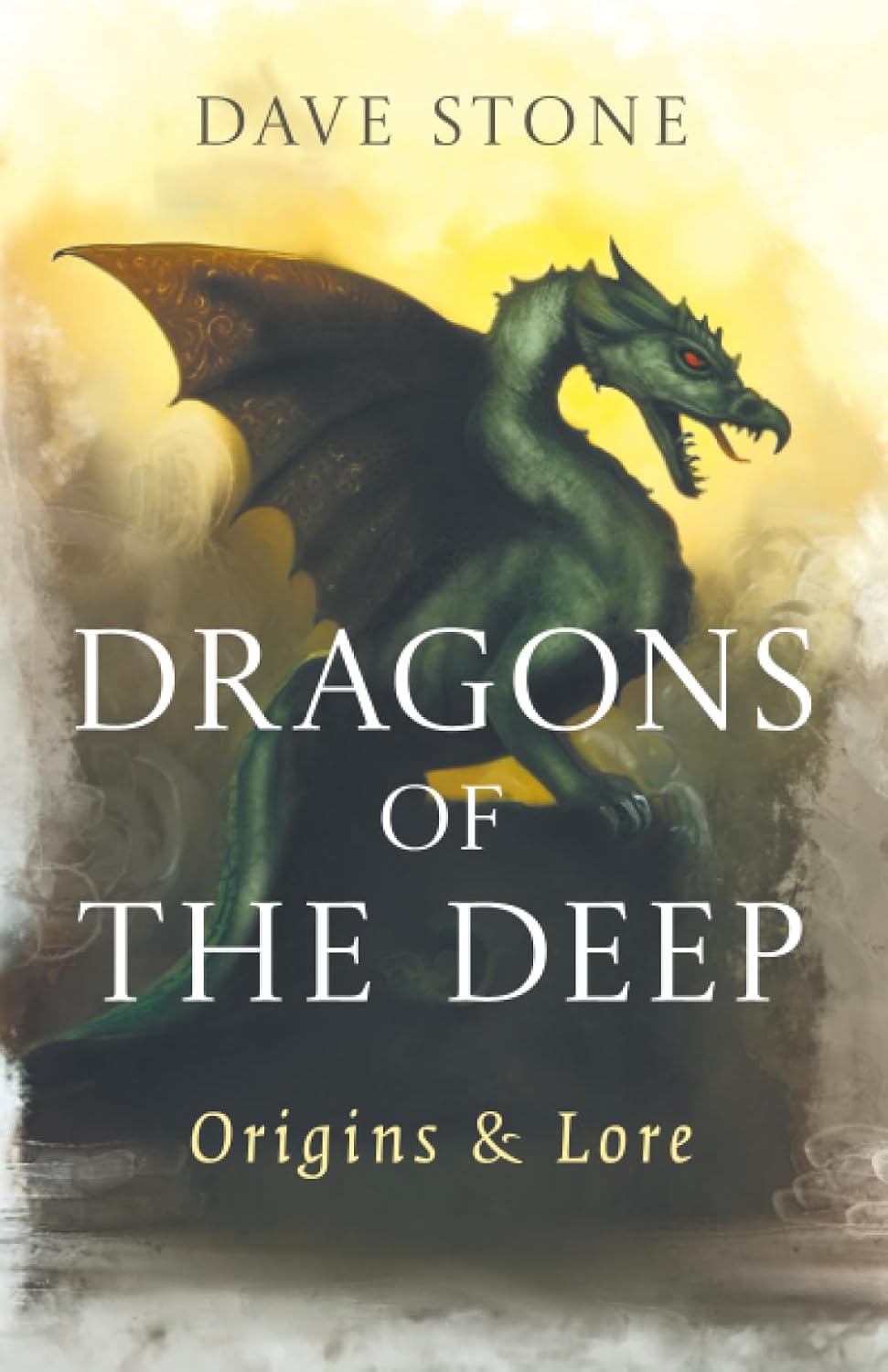
Dragons of the Deep: Origins & Lore
By Dave Stone
Moon Books, 2026
Reviewed By Katrina Rasbold
Dragons are everywhere. They coil through creation myths, sleep beneath mountains, guard wells and treasure, circle the world, haunt ruined places, accompany kings, protect sacred trees, devour heroes, heal the sick, and rise from the depths of some of humanity’s oldest stories. We have made them monsters, gods, ancestors, demons, guardians, emblems of sovereignty, symbols of chaos, and vessels of wisdom. In Dragons of the Deep: Origins & Lore, Dave Stone asks why.
This is not a field guide to legendary beasts, nor a simple collection of dragon stories. Stone is interested in what sits beneath the stories: the recurring patterns that appear across cultures separated by geography and time, and what those patterns may reveal about the dragon’s oldest symbolic functions. The result is ambitious, wide-ranging, and frequently fascinating.
Stone approaches the subject as someone who has spent decades studying historical imagery and symbolism. His background as a stone carver led him first to ancient motifs and then to the stories, beliefs, and cultural contexts behind them. That visual sensitivity remains evident throughout the book. Dragons are not merely creatures in narratives; they appear on armour, weapons, carvings, talismans, standards, sacred objects, and monuments, carrying meanings that can shift dramatically depending upon who is looking at them.
One of the book’s strongest qualities is its refusal to accept the familiar Western dragon as the only dragon. The fire-breathing beast guarding treasure is certainly here, but Stone quickly moves far beyond it. His dragons emerge from Mesopotamia, India, China, Japan, Armenia, Greece, Britain, Ireland, Scandinavia, and elsewhere. Some are terrifying. Others are protective or healing. Some embody raw elemental power; others guard knowledge or serve as cosmic forces.
Stone’s dragon is not a single creature so much as a recurring human idea wearing many skins.
The first chapters establish how profoundly dragon imagery became associated with magical potency and worldly authority. Dragon blood grants knowledge or invulnerability. Dragon stones and pearls confer protection. Warriors and rulers adopt dragon imagery to absorb its power symbolically. In China, imperial authority is repeatedly linked with the dragon, while European soldiers carried dragon standards or ornamented weapons and armour with serpentine forms. Stone interprets such imagery as more than decoration: in many contexts, it functioned as sympathetic magic, allowing the bearer to participate in the qualities attributed to the beast.
Yet some of the most compelling material appears when Stone follows the dragon away from palaces and battlefields and back toward wilderness and water.
Again and again, serpent-dragons inhabit lakes, wells, springs, bogs, caves, mountains, and other liminal landscapes. Stone traces traditions in which these beings guard sacred waters, offer healing or knowledge, and function as spirits of place. In his reading, this material may preserve traces of something older than the familiar dragon-slayer narrative: an animistic relationship with landscape in which serpent beings were not enemies of humanity but powerful local presences requiring respect. This distinction becomes central to the book.
Western mythology often gives us a storm god, saint, or hero defeating a serpent associated with earth, water, wilderness, or chaos. Tiamat falls to Marduk. Python falls to Apollo. Later Christian saints inherit a dragon-slaying role already ancient long before Christianity appeared.
Stone is particularly interested in what such stories might represent culturally. He repeatedly asks whether they preserve memories of changing religious systems, shifting social structures, or the replacement of older traditions by newer ones. He does not claim certainty where certainty is impossible, but the questions themselves are provocative.
The contrast with many Eastern traditions is striking. There, dragons more often remain worthy of reverence, associated with rain, fertility, cosmic balance, emperors, wisdom, and the movement between heaven, earth, and the watery depths. Stone argues that beneath later layers of hostile dragon mythology may lie an older pattern in which the serpent-dragon was connected with sacred waters, healing, prophecy, and the living Earth.
Whether every connection convinces every reader is almost beside the point. Dragons of the Deep is at its best when Stone follows similarities far enough to make us look again without pretending the surviving evidence can answer every question.
The chapter on benevolent dragons is especially valuable because it restores dimensions of the creature easily lost beneath centuries of heroic dragon-slaying. Dragons guard sacred trees and wells. Serpents shed their skins and become natural symbols of regeneration. Water brings life, healing, fertility, and vision. In some traditions, the serpent itself becomes a genius loci, the living spirit of a sacred place.
From there, Stone moves into alchemy, the Ouroboros, Orphic traditions, Gnosticism, Hermeticism, cosmic eggs, sacred union, and the serpent as a symbol of transformation.
Here the book becomes particularly rich. One mythic pattern emphasizes conflict: sky god against dragon, order against chaos, masculine against feminine. Another emphasizes union: masculine and feminine principles combine and produce a third, often androgynous, principle. Stone compares this latter pattern to symbols such as the caduceus and yin-yang, where apparent opposites are not destroyed but brought into balance. That contrast gives Dragons of the Deep much of its intellectual energy.
The dragon can destroy and create. It can poison and heal. It belongs to water and fire, earth and sky. It can represent death while its shedding skin promises rebirth. It can be masculine, feminine, both, or something that refuses the distinction entirely. Stone repeatedly returns to this capacity to hold opposites, suggesting that the dragon’s persistence may come partly from its ability to embody forces too complex for simpler symbols.
The research behind the book is extensive, and the bibliography and endnotes are substantial. Yet Stone’s writing remains enthusiastic rather than academic in tone. He clearly enjoys following a serpent trail wherever it leads, and that enthusiasm makes dense comparative material remarkably readable.
Dragons of the Deep will appeal to anyone interested in mythology, folklore, Pagan history, sacred landscape, alchemy, symbolism, or the strange continuities that appear when human beings tell stories about the natural world. Its greatest strength is that it never really tries to answer the childlike question, “Were dragons real?” Stone is pursuing something much more interesting.
Dragons are real in the sense that humanity has been dreaming them for thousands of years, and those dreams have shaped religion, art, power, magic, and our relationship with the wild.
By the end of Dragons of the Deep, the dragon has become far more than the monster waiting for a hero to arrive. It is the thing beneath the water. The guardian at the root of the tree. The serpent circling creation and perhaps, still, something deep within us waiting to be remembered.
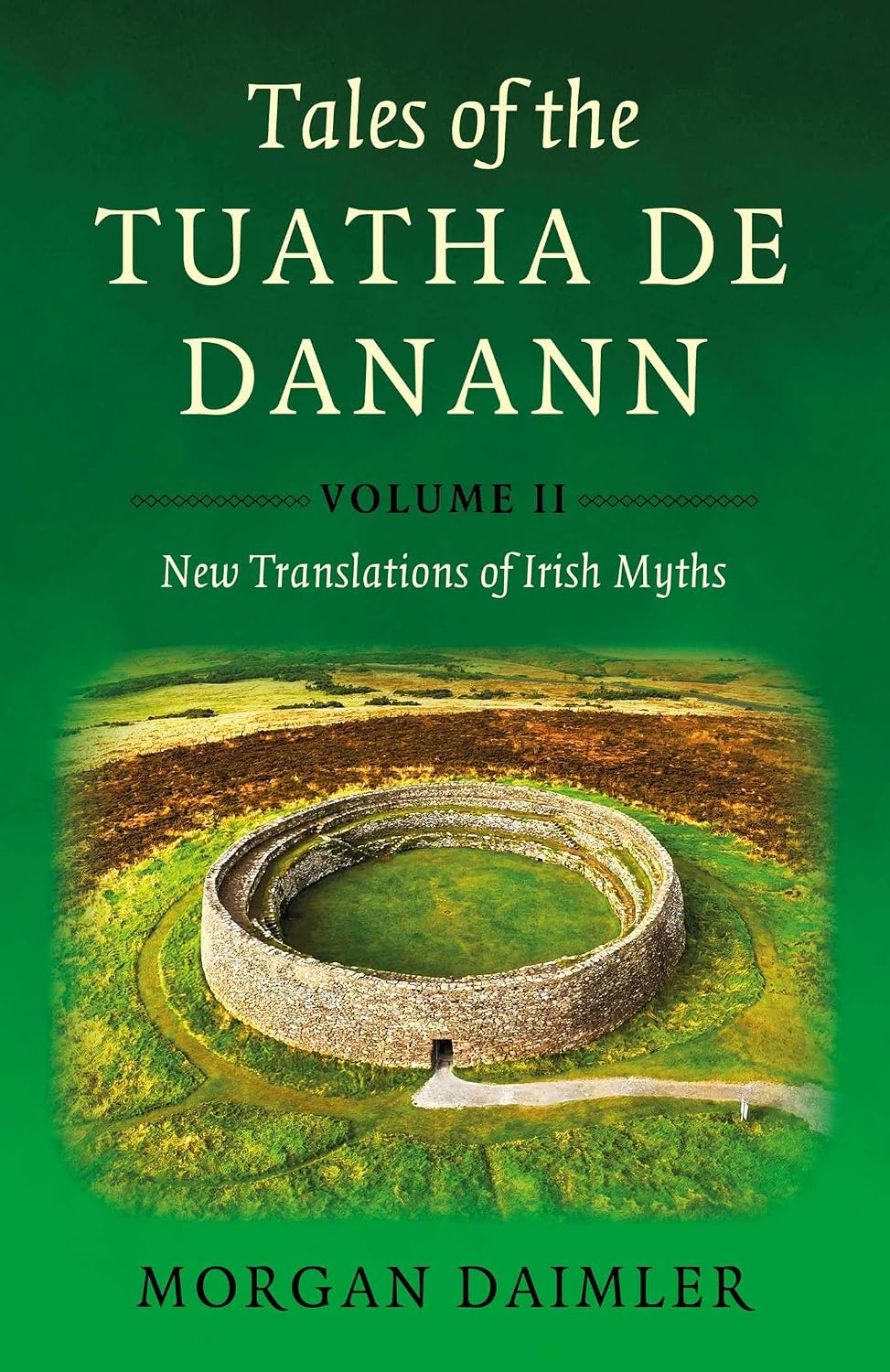
Tales of the Tuatha De Danann: New Translations of Irish Myth, Volume 2
By Morgan Daimler
Moon Books, 2026
Reviewed By Katrina Rasbold
Irish mythology has suffered an odd fate in modern Paganism. We love its gods, heroes, sidhe, battles, sacred landscapes, and poetic mysteries, yet many of us encounter them through translations that are old, overly polished, incomplete, or so archaic in tone that the original material begins to feel farther away rather than closer. Morgan Daimler’s Tales of the Tuatha De Danann: New Translations of Irish Myth, Volume 2 addresses that problem with patience, humility, and considerable care.
This second volume in a planned three-book series gathers Old and Middle Irish material connected with the Tuatha De Danann and Aos Sidhe and offers new, deliberately literal English translations alongside the original Irish. Daimler is explicit about the intention: smoother English can certainly be prettier to read, but smoothing can also erase structure, repetition, ambiguity, and shades of meaning present in the original. Their goal is therefore not to produce elegant modern retellings, but to bring English-speaking readers as close to the source language as reasonably possible. That distinction is important.
Daimler is not rewriting Irish mythology for modern Pagans. They are opening a door and allowing us to look more closely at what is actually there.
The collection contains seven texts, including The Cauldron of Poesy, The Adventure of Nera, The Adventure of Connla the Fair, The Adventures of Laegaire son of Crimthann in Mag Mell, and the enormously important Cath Maige Tuired, or The Battle of the Plain of Pillars. The result is not meant to form a single continuous mythic cycle. Instead, it offers a series of windows into older Irish ideas about poetry, sovereignty, magic, the Otherworld, the sidhe, divinity, kingship, death, battle, and inspiration.
The approach is scholarly without pretending to academic authority Daimler does not claim. They identify themself plainly as an amateur translator working from love of the language rather than formal academic credentials, while also explaining orthographic variations, the differences between Old, Middle, and modern Irish, and the reasons for including extensive notes on translation choices. That transparency makes the work more trustworthy, not less.
One of the highlights is the new translation of The Cauldron of Poesy, a fascinating text concerned with the source of poetic inspiration and the three cauldrons said to exist within human beings. Modern Pagans have often interpreted these as something resembling energy centers, but Daimler wisely presents the text itself rather than insisting upon a modern esoteric system.
The material is strange, beautiful, and occasionally difficult, as old myth should be allowed to remain. Knowledge, poetry, joy, sorrow, inspiration, and personal transformation move through the cauldrons in ways that resist reduction to a tidy chart. One of the pleasures of this translation is precisely that the reader is permitted to wrestle with the material instead of being handed a simplified interpretation.
The three Echtra, or adventure tales, are equally valuable. These stories take us across the permeable border between the human world and the Otherworld, where time, death, beauty, desire, and allegiance obey different rules. The Adventure of Connla the Fair is particularly significant because Daimler identifies it as one of the oldest pieces in the collection and an early Irish-language reference to the Aos Sidhe.
The Adventure of Nera, set at Samhain, gives us ghosts, the dead, the sidhe, prophecy, danger, and the unsettling instability of the boundary between worlds. Daimler notes its importance within the Ulster Cycle and its value for understanding how spirits and the Aos Sidhe were represented in the period from which the story comes.
These are not sanitized fairy stories. They are often strange, morally complicated, violent, funny, erotic, contradictory, and deeply rooted in a worldview in which the Otherworld is neither heaven nor fantasyland. It exists beside ordinary life, close enough to enter and dangerous enough that doing so may permanently change you.
The centerpiece of the volume, however, is Cath Maige Tuired. Daimler calls it possibly the most significant myth in the Irish canon for understanding the Tuatha De Danann, and it is difficult to argue with that assessment. The story recounts the oppression of the Tuatha De by the Fomorians and their eventual rebellion and battle for freedom, while giving us some of our richest surviving material concerning figures such as Lugh, the Dagda, and the Morrigan.
Of particular importance is Daimler’s decision to translate poetic material omitted wholly or partially from earlier major English versions. They state that, to the best of their knowledge, this is the only complete English translation currently including those sections. For anyone seriously interested in the Tuatha De Danann, that alone makes this volume noteworthy.
Yet perhaps the book’s greatest gift is not any single translation. It is the way Daimler reminds us how much is lost when mythology is reduced to character profiles. Modern Pagan discussions can sometimes turn deities into neat lists of correspondences: Lugh is this, the Morrigan is that, the Dagda governs these things. The original texts are rarely so cooperative. Here the gods act, bargain, fight, heal, deceive, craft, feast, prophesy, desire, and contradict the tidy categories later readers build around them.
The older material does not make the gods simpler. It makes them larger.
The extensive notes are invaluable in this regard. Daimler repeatedly points out words with several possible meanings, explains why a particular English rendering was chosen, and preserves ambiguities where certainty would be misleading. Even something as seemingly straightforward as a color, weapon, place-name, or expression may contain shades of meaning that disappear in translation.
Tales of the Tuatha De Danann, Volume 2 is therefore not the book I would hand to someone wanting a breezy introduction to Irish mythology. It asks more attention than that. For the Pagan, folklorist, polytheist, writer, priest, scholar, or seeker who wants to move beyond modern summaries and closer to the surviving texts themselves, however, it is an exceptional resource.
Morgan Daimler has done something deceptively difficult here: made these old stories more accessible without making them less old and in preserving their rough edges, repetitions, uncertainties, poetry, and strangeness, they allow something precious to remain intact.
We do not need the old myths to sound modern in order for them to speak to us. Sometimes we simply need someone willing to help us hear them more clearly.
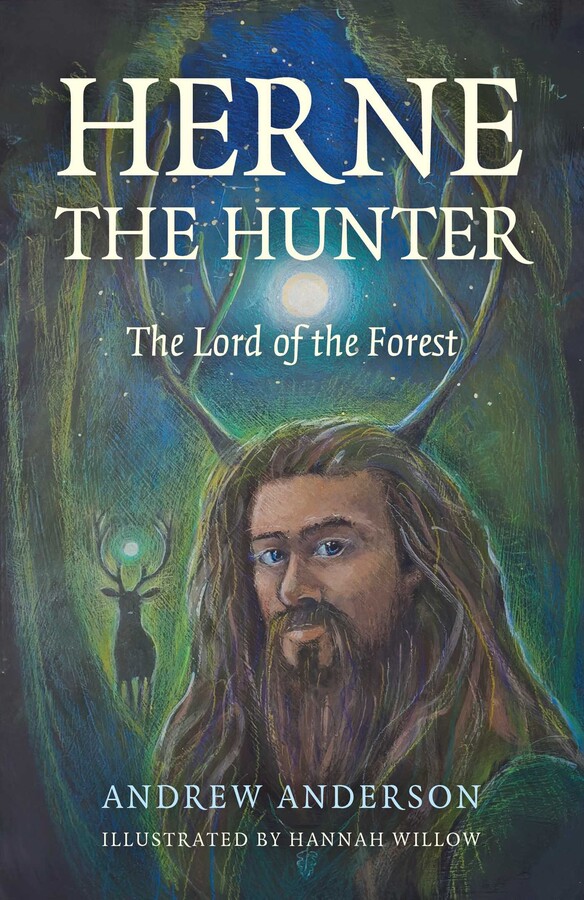
Herne the Hunter: Lord of the Forest
By Andrew Anderson
Illustrated by Hannah Willow
Moon Books
Reviewed By Katrina Rasbold
Some figures arrive in modern Paganism trailing centuries of documented worship. Others emerge from folklore, literature, landscape, imagination, and our very human tendency to keep telling a story until the story becomes something more. Herne the Hunter belongs emphatically to the latter company.
In Herne the Hunter: Lord of the Forest, Andrew Anderson undertakes something considerably more interesting than trying to prove that Herne is an ancient Pagan god. Instead, he asks how a mysterious horned figure associated with Windsor became the Lord of the Forest recognized and honored by so many contemporary Pagans. His answer carries us through Shakespeare, local legend, antiquarian speculation, Gothic literature, twentieth-century popular culture, television, environmental consciousness, and four centuries of collective imagination. The result is both an impressive investigation and a fascinating meditation on how mythology is actually made.
Our earliest written encounter with Herne comes through Shakespeare’s The Merry Wives of Windsor. Here he is a frightening local spirit said to haunt an oak in Windsor Forest, but his story also serves the very practical theatrical purpose of helping the Merry Wives humiliate Falstaff. Anderson carefully examines how much of what we now regard as essential Herne imagery may have been shaped by the needs of Shakespeare’s play. Even those iconic horns may owe as much to Elizabethan jokes about cuckoldry as to any prehistoric horned deity. For a Pagan reader devoted to Herne, this could easily become an exercise in disenchantment. Remarkably, it does not.
That is Anderson’s greatest accomplishment. He follows the available evidence without treating historical skepticism as spiritual demolition. There is simply no documented lineage connecting Herne conclusively to Cernunnos, Woden, or another ancient deity, and Anderson refuses to manufacture one. Instead, he asks a much more intriguing question: If Herne was created or substantially shaped by Shakespeare, does that make him any less real as a modern Pagan god? Anderson’s answer is no.
From there, Herne the Hunter becomes almost a biography of an evolving myth. Each generation encounters Herne and leaves something behind. Samuel Ireland adds the story of a forest keeper hanging himself from the oak. Later writers elaborate, reinterpret, and sometimes confidently present speculation as ancient tradition. Literature feeds folklore, folklore returns to literature, popular culture enters the mixture, and eventually modern Pagans inherit a Herne far larger than the figure who first walked around Shakespeare’s oak.
Rather than exposing that process as fraudulent, Anderson reveals just how organic mythology can be. This is where the book becomes much larger than its subject. Modern Pagans can sometimes become preoccupied with antiquity, as though older automatically means more authentic. Anderson quietly challenges that assumption. A deity whose recognizable form developed over the past four centuries does not necessarily have less spiritual significance than one whose name appears on an ancient inscription.
A mythology does not become meaningless simply because we can see human fingerprints upon it.
Few sections illustrate this better than Anderson’s discussion of Richard Carpenter’s Robin of Sherwood. Carpenter transformed Herne for a mass television audience into a guardian of Robin and his followers and a figure unmistakably resonant with modern Pagan sensibilities. Anderson argues that this interpretation helped secure Herne’s place as a deity in the popular imagination. By the end of the twentieth century, Herne no longer belonged to any single writer. He belonged to people wandering Windsor hoping to glimpse antlers in the moonlight, children playing Robin Hood, and those turning toward Pagan spiritual paths.
The book’s most beautiful metaphor arrives through Zoe Gilbert’s Mischief Acts. In Gilbert’s story, a murmuration of starlings briefly forms the shape of a stag’s head. The individual birds remain birds, but together they create something recognizable and extraordinary. Anderson adopts that image for Herne himself: no single story, author, historical claim, sighting, or spiritual experience contains him. Herne exists in the movement among them. That is an extraordinarily useful way to think about myth.
Hannah Willow’s evocative illustrations complement Anderson’s exploration beautifully, while his background in Shakespearean studies allows him to handle literary evidence with an appropriately critical eye. He is particularly good at tracing claims back through successive authors and discovering that something repeatedly presented as ancient folklore may actually originate in comparatively recent fiction. The scholarship is serious, but Anderson’s affection for his subject keeps the book from ever becoming a forensic dismantling of a beloved Pagan figure.
In fact, the deeper he digs, the more interesting Herne becomes. By the conclusion, whether Herne can claim an uninterrupted lineage from an ancient horned god seems almost beside the point. Anderson traces his extraordinary metamorphosis from the ghost of a man associated with a particular tree, to a woodland spirit, to a being identified with England’s forests themselves. At a time when many people feel increasingly disconnected from nature, Herne has become a potent symbol of our longing to restore that relationship. Perhaps that is the real revelation of Herne the Hunter.
Anderson does not diminish the mystery by showing us how it was made. He makes the mystery larger.
Herne the Hunter: Lord of the Forest is thoughtful, meticulously researched, wonderfully readable, and unexpectedly moving. It deserves a place not only on the shelves of those already devoted to Herne, but among anyone interested in folklore, modern Paganism, literature, mythmaking, and the strange process through which stories acquire lives of their own. Four hundred years have failed to settle the question of who Herne the Hunter really is. After reading Andrew Anderson’s marvelous book, I rather hope they never do.
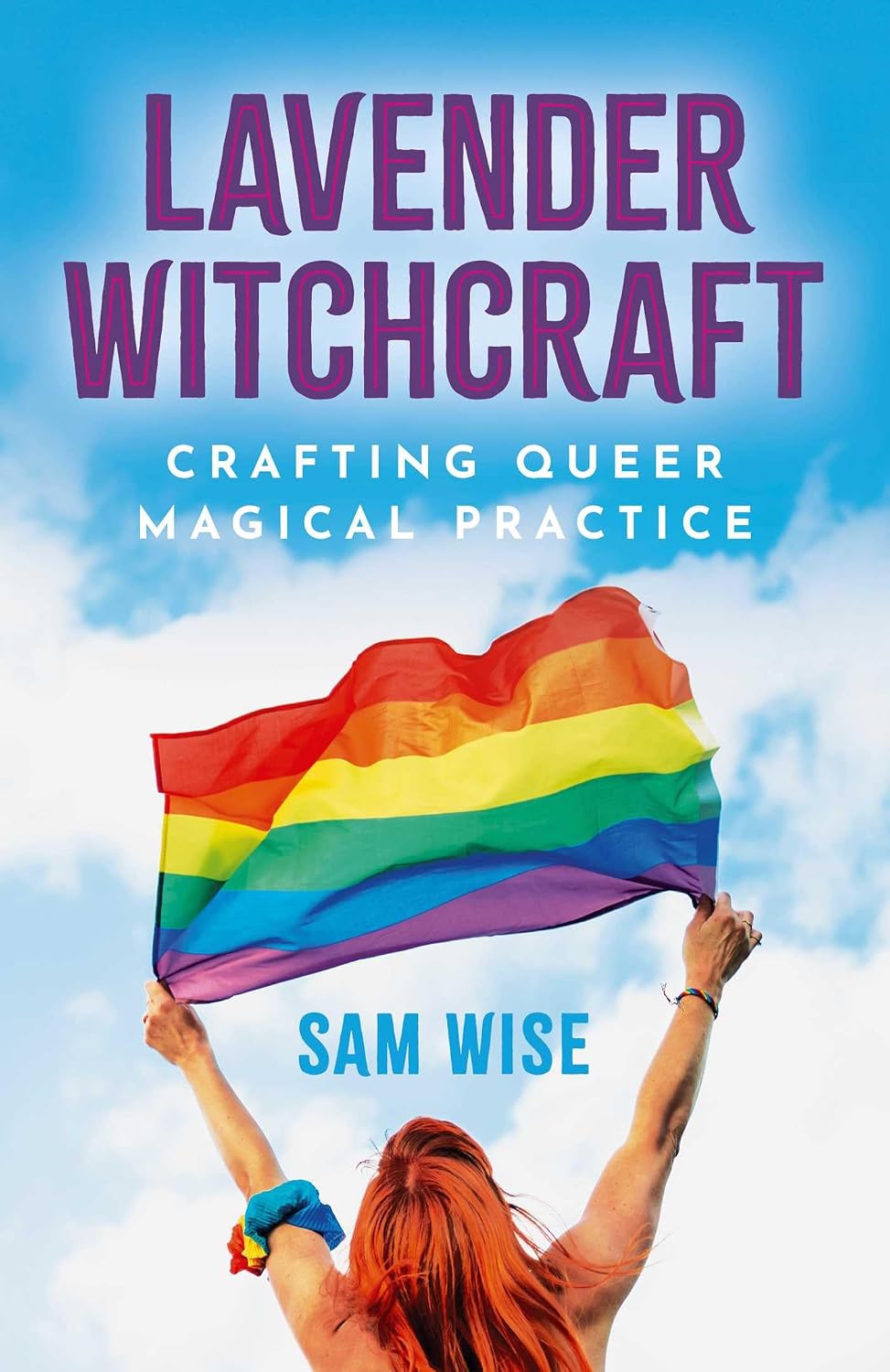
Lavender Witchcraft: Crafting Queer Magical Practice
By Sam Wise
Moon Books, 2026
Reviewed By Katrina Rasbold
There are books that ask readers to adapt themselves to an established spiritual system, and there are books that ask whether the system itself might need to make a little more room. Sam Wise’s Lavender Witchcraft: Crafting Queer Magical Practice belongs firmly in the second category.
Wise begins from a deceptively simple observation: Witchcraft has long attracted people who live outside mainstream expectations, yet many contemporary magical traditions still rely upon rigid ideas about gender, sexuality, divine masculine and feminine energies, heterosexual fertility symbolism, and other structures that can leave queer practitioners feeling as though they are visitors in someone else’s sacred space. Wise’s response is not to discard Witchcraft and begin again. Instead, they ask what happens when we widen the circle. That approach makes Lavender Witchcraft feel less like a manifesto and more like an invitation.
The book is written primarily for queer witches, although Wise explicitly welcomes allies as well. Their use of “queer” is intentionally broad, encompassing identities outside cisgender heterosexual norms. Just as importantly, Wise resists presenting one correct method of practice. This is largely secular witchcraft rather than a new religious denomination with membership requirements. The author offers possibilities, adaptations, and personal approaches, then encourages readers to determine what works within their own magical lives. That generosity is one of the book’s greatest strengths.
Wise moves through familiar Witchcraft territory—elements, planets, nature magic, ancestors, divinity, the Wheel of the Year, spellcraft, ritual, and community—but examines each through the lens of inclusion. The result is not simply “queer Witchcraft” constructed as a separate specialty. Instead, Lavender Witchcraft demonstrates how familiar magical practices can be reconsidered without sacrificing their power, beauty, history, or usefulness.
The discussion of the elements is an excellent example. Rather than accepting as immutable the familiar associations of earth and water with femininity and air and fire with masculinity, Wise examines these correspondences and opens them to reinterpretation. Readers who enjoy working with gendered correspondences are not ordered to abandon them. They are simply invited to recognize them as one magical model rather than an unalterable law. That distinction runs throughout the book. Wise is less interested in destroying old structures than in loosening their grip.
The title itself reflects that philosophy. Lavender has a long and complicated association with queer identity, resistance, persecution, activism, and reclamation. Wise brings that history into magical practice, allowing lavender to become more than another entry on an herbal correspondence chart. It becomes a point of connection between contemporary queer practitioners and the people whose lives, struggles, and courage helped create the world they now inhabit.
History, however, never overwhelms practice. Recipes, correspondences, ritual suggestions, spells, altar ideas, oils, incense, candle work, floral waters, and seasonal practices appear throughout the book. Lavender Witchcraft is designed to be used, not merely agreed with.
I particularly appreciated Wise’s repeated attention to accessibility. When a practice involves physical exertion, flame, incense, cooking, ingredients, or other elements that may not be possible or safe for every practitioner, alternatives are frequently offered. Accessibility is not treated as an afterthought or an unfortunate concession. Instead, it becomes part of the creative process of building a magical practice that actually fits the practitioner. That is something many occult books could stand to learn from.
The chapter concerning queer ancestors is another highlight because Wise refuses to romanticize ancestry. Ancestors—whether biological, spiritual, cultural, or historical—do not become flawless simply because they are dead. Influence can be acknowledged without becoming veneration, and history can be honored without requiring us to excuse the prejudices and harms of those who came before us.
Wise brings the same thoughtful approach to divinity. For people carrying religious trauma, particularly those harmed by religious teachings that condemned their identities, words such as “God,” “worship,” and “prayer” may carry considerable baggage. Lavender Witchcraft leaves room for that reality. Deity work is available, not mandatory. A magical life need not resemble anyone else’s in order to be meaningful.
The Wheel of the Year receives similar reconsideration. Wise explores ways seasonal celebrations can acknowledge queer bodies, relationships, identities, and experiences without reducing sacred sexuality and fertility to heterosexual reproduction. Sexual expression can be sacred, but so can celibacy and asexuality. Once again, expansion rather than replacement is the point.
By the time Wise turns toward community-building, the larger argument of Lavender Witchcraft becomes unmistakable: inclusion requires more than placing a rainbow flag over an otherwise unchanged structure. It requires consideration of leadership, accessibility, boundaries, safety, decision-making, expectations, and whose experiences are actually being centered. That is where the book succeeds most fully.
Wise does not merely ask modern Witchcraft to become more inclusive; they show what inclusion can look like in actual magical practice.
Although this book will naturally appeal to queer witches seeking practices and language that more accurately reflect their lives, I would hesitate to limit its audience there. Pagan clergy, teachers, coven leaders, ritualists, event organizers, and anyone responsible for creating spiritual community will find much here worth considering. So will solitary practitioners who have never stopped to examine how many inherited magical correspondences they accepted simply because someone once told them, “This is how it is done.”
Lavender Witchcraft is approachable without being shallow, challenging without losing its magical heart, and practical without becoming prescriptive. It is both an invitation and a toolkit for creating a magical practice in which the practitioner does not have to leave part of themselves outside the circle.
Perhaps that is the most valuable thing Wise offers: not permission to be queer, because no one needs to grant that permission, but permission to question whether inherited spiritual structures must remain untouched simply because we inherited them. Traditions remain alive because people continue to engage with them.
The circle is not weakened when more people can enter it. Sometimes the magic grows because we finally made enough room.
Want to join the conversation about this blog post? Go to the Green Egg Forum and scroll for the forum post that relates to this article
 As Editor of the Green Egg Blog, Katrina Rasbold weaves ancient wisdom into the complexities of modern life, fostering a space for deep inquiry and magical growth. Katrina is the editor of Green Egg Magazine, a priestess, author, and co-creator of the CUSP path, working from the crossroads of tradition and transformation. She owns and operates Crossroads Occult with her husband, Eric, offering a sanctuary for those seeking mentorship, quality handmade magical items, and authentic craft. Discover her full body of work at www.katrinarasbold.com.