This visit to The Pagan Bookshelf brings together three books concerned, in very different ways, with what we make of ourselves. Loren Morris puts cord magic quite literally into our hands, Shavonne Readus approaches Tarot as a means of developing confidence and self-understanding, and Madison Murphy Barney invites us into the decidedly stranger territory suggested by a title like Our Ancestors Want Us to Be Mushrooms.
Practical magic, Tarot, ancestry, identity, and transformation make unusual shelfmates, perhaps, but Pagan bookshelves have never been particularly interested in behaving themselves. Let’s see what these three have to offer.
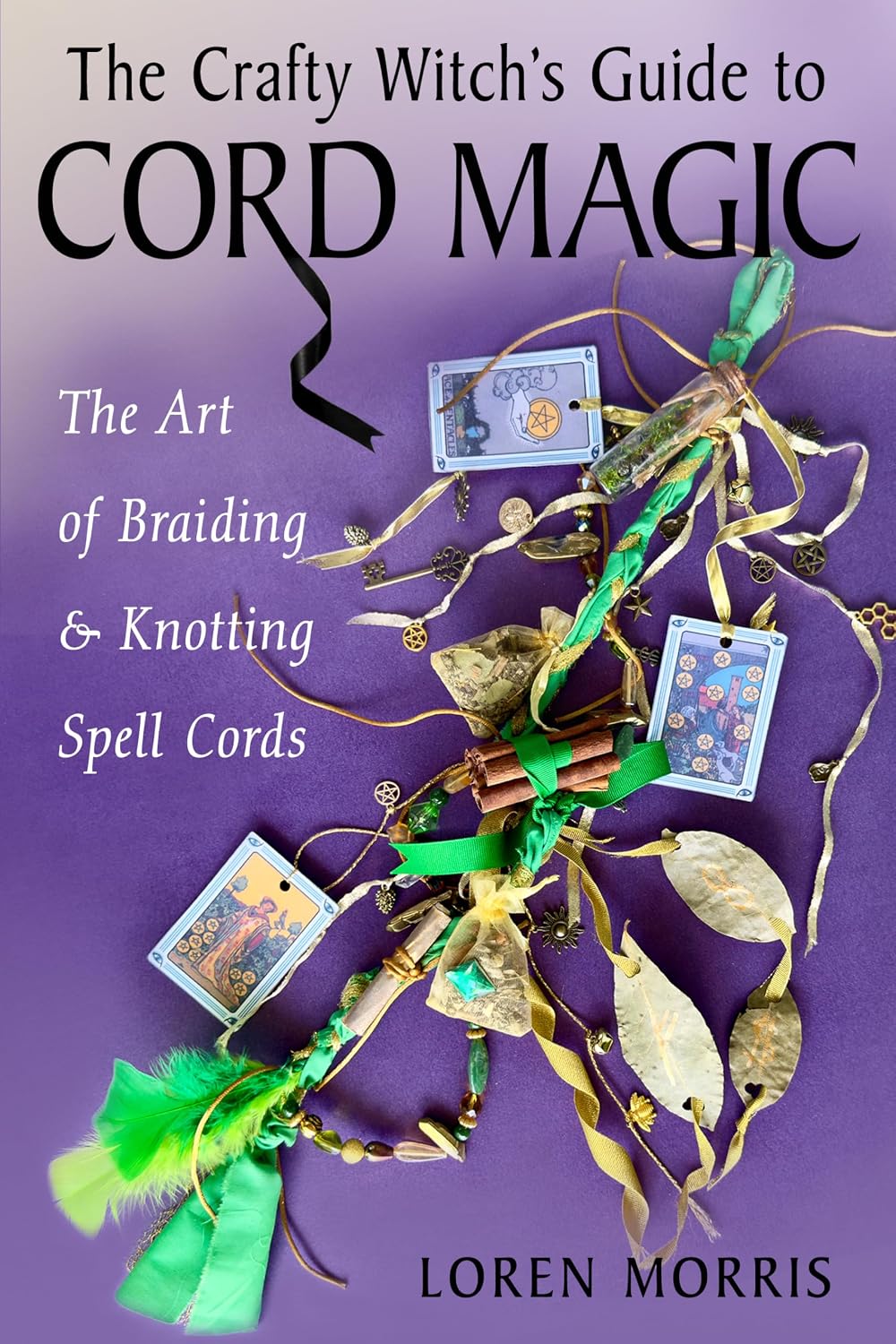
The Crafty Witch’s Guide to Cord Magic: The Art of Braiding & Knotting Spell Cords
Loren Morris
Weiser Books, 2026
Reviewed By Katrina Rasbold
There is something deeply satisfying about magic that leaves something behind. A candle burns away. Incense becomes smoke. Herbs are scattered, buried, washed away, or consumed. Much of magical practice is deliberately ephemeral, existing intensely for a moment before disappearing into the work itself. Cord magic is different. Thread by thread and knot by knot, intention takes physical form, leaving the practitioner with an object that is simultaneously spell, talisman, record, and work of art.
In The Crafty Witch’s Guide to Cord Magic, Loren Morris takes that simple premise and expands it into an impressively rich magical practice. Morris has been a practicing Traditional Witch for more than twenty-five years and is the owner of Primitive Witchery, a magical arts-and-crafts shop. Her experience as both Witch and artisan is important because this is emphatically not simply another book of spells with yarn added for atmosphere. Morris approaches the construction itself as part of the magic. That distinction gives the book much of its charm.
Morris begins with the historical and magical language of knots and braids, exploring their appearances across cultures and traditions before moving into the materials that can transform a cord into something much more elaborate. Bells, keys, feathers, Tarot cards, runes, bindrunes, magical alphabets, sigils, herbs, charms, colors, and other symbolic objects all become part of the vocabulary from which a practitioner can construct a working. The result is less like following a spell recipe and more like learning a new magical medium.
That is one of the strongest aspects of this book. Morris provides plenty of specific projects, but she also gives readers enough information to understand why she has made particular choices. A money cord, for example, incorporates green and gold fabric, herbs traditionally associated with prosperity and financial success, cinnamon sticks, and Tarot imagery including the Ace, Nine, and Ten of Pentacles. Once the practitioner understands how those correspondences are layered together, it becomes relatively easy to imagine substituting materials or designing an entirely original cord.
The projects become increasingly ambitious as the book progresses. Morris offers cords for money, abundance, welcoming a baby, zodiacal work, manifestation and vision work, deity devotion, love, sea magic, reversal, and binding. She even ventures unapologetically into more aggressive territory with “A Very Grimm Cord, Indeed,” demonstrating that cord magic need not be confined to healing, prosperity, protection, and other comfortably benevolent workings. The range is refreshing. This is a magical technique presented as a genuine tool rather than one artificially restricted to a particular moral philosophy.
There is also a wonderful tactile quality to Morris’s approach. These workings invite the practitioner to gather cloth, ribbon, herbs, charms, beads, feathers, photographs, symbols, and small meaningful objects and then spend actual time handling them. Braiding and knotting become meditative acts in themselves. Morris specifically describes the repetitive movement as a means of developing focus and presence, with each movement becoming another opportunity to reinforce the magical intention. For those of us who appreciate magic that involves actually doing something, this is tremendously appealing.
The book is also highly accessible. You do not need to be an accomplished fiber artist to begin. Morris walks the reader through basic construction before adding complexity, and many of the supplies can be found in ordinary craft stores or improvised from materials already at hand. The cords shown throughout the book can become wonderfully elaborate, but the underlying principle remains approachable: select materials that embody the intention, physically weave that intention into the cord, add meaningful components, and activate the finished working.
One especially lovely example is the Wishes for Baby Cord, which can become a communal magical object. Guests at a baby shower or welcoming celebration can contribute charms, wishes, and blessings, after which the parents complete or activate the cord. It beautifully illustrates what cord magic can do particularly well: accumulate layers of meaning. Every object can carry a story. Every knot can hold an intention. The completed cord becomes not merely something made for a person, but a physical repository of the people, hopes, and energies involved in its creation.
Morris also remembers something magical books occasionally neglect: spells have an aftermath. The final chapter addresses the life cycle of the cord itself—when to recharge it, when to dismantle it, when to alter it as circumstances change, and when the working has completed its purpose and should be released. She even cautions readers against releasing synthetic fibers, plastics, metals, or treated materials into natural waterways when disposing of a cord. That attention to what happens after the spell is a thoughtful and welcome inclusion.
Perhaps the greatest strength of The Crafty Witch’s Guide to Cord Magic is that it encourages creativity without leaving the reader stranded in vagueness. “Use your intuition” is useful magical advice only after someone has given you enough foundation to understand what you are intuiting about. Morris supplies that foundation. Readers can reproduce her cords precisely if they wish, but the greater gift of the book is learning enough of the language to eventually stop needing her patterns.
Cord magic is certainly not new, and Morris does not need it to be. Knots, braids, fibers, and threads have carried magical and symbolic meaning for centuries. What she offers is a particularly expansive contemporary treatment of the subject, transforming a deceptively simple magical technology into something tactile, visual, personal, and potentially quite beautiful.
For crafty Witches, this book will probably be irresistible. For practitioners who have never considered themselves particularly crafty, it may be even more valuable. The Crafty Witch’s Guide to Cord Magic offers a form of spellwork that invites us to slow down, work with our hands, choose deliberately, and quite literally weave our intentions into being. Sometimes magic really does begin with a piece of string.
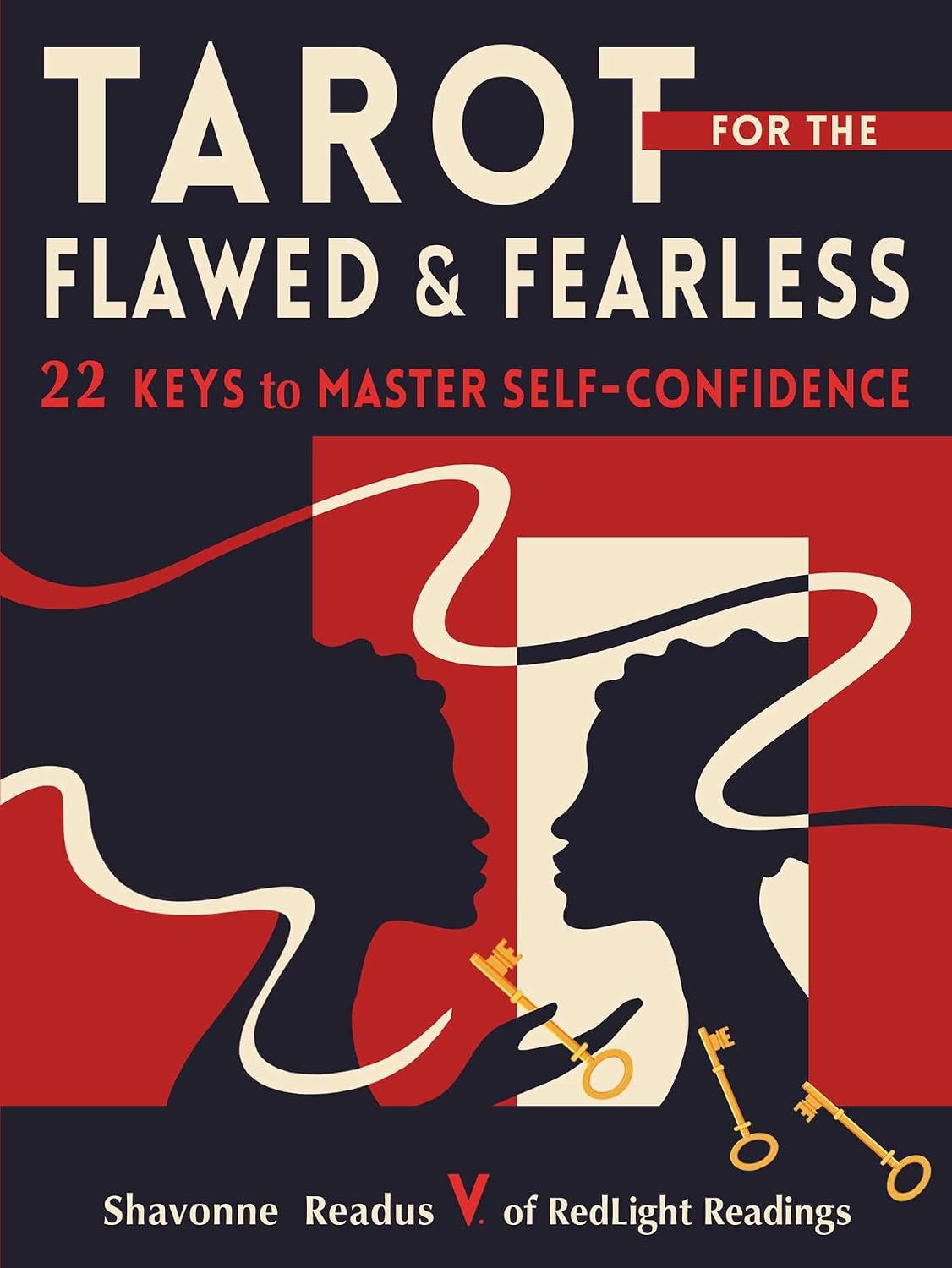
Tarot for the Flawed & Fearless: 22 Keys to Master Self-Confidence
By Shavonne Readus
Weiser Books, 2026
Reviewed By Katrina Rasbold
There are a great many Tarot books in the world. After decades of reading, teaching, and working professionally with Tarot, I confess that it takes something more than another tour through the meanings of seventy-eight familiar cards to make me sit up and pay attention. Fortunately, Tarot for the Flawed & Fearless is not trying to be another Tarot encyclopedia. Shavonne Readus has something much more specific in mind: she takes the twenty-two cards of the Major Arcana and turns them into twenty-two “keys” for developing confidence, self-trust, authenticity, and a stronger sense of personal agency. That distinction matters.
Readus is not primarily interested in teaching us how to predict what happens next. She is interested in what happens when we recognize ourselves in the cards and deliberately work with what we find there. Her Major Arcana becomes a vocabulary for exploring the qualities we already possess, the ones we have neglected, and the ones we might need to cultivate.
The premise is simple enough: each of us carries fears, insecurities, anger, doubt, and those peculiar little places where our confidence collapses despite all evidence that we ought to know better. Readus does not ask us to become flawless before becoming powerful. The “flawed” part of the title is important. Fearlessness here is not the absence of vulnerability, but the willingness to show up as ourselves anyway.
Readus comes to that subject personally. In her preface, she describes being a young Black girl fascinated by the supernatural, speaking with the dead and exploring a Ouija board while attending Catholic school. The lesson she absorbed from the adults around her was not simply that the Ouija board was unwelcome. She learned that being different could cost her acceptance, and that leadership was safer when what she was leading was socially acceptable. The eventual result was a habit familiar to many people: presenting an acceptable version of oneself while quietly stuffing the more authentic parts somewhere out of sight.
That personal foundation gives the book considerably more warmth than it might otherwise have had. Readus is not lecturing from some mountaintop of perfected self-esteem. She is working through the same material alongside the reader, and her conversational style reinforces that feeling.
The structure is especially effective. Rather than requiring the reader to dutifully march from the Fool through the World, Readus encourages a “choose your own adventure” approach. Go where the trouble is. Choose the archetype that speaks to what you need now. Each Major Arcana card receives its own exploration incorporating meanings, symbolism, astrological correspondences, journal prompts, embodiment practices, exercises, simple magical work, and Tarot spreads. This makes Tarot for the Flawed & Fearless much more workbook than reference book, and I think that is where it succeeds best.
The familiar cards become remarkably practical. The Emperor explores power, leadership, assertiveness, and the difference between presence and control. The Hermit becomes an invitation to notice when we are frantically seeking outside ourselves for something we really need to find within. Readus describes her own warning signs with refreshing humor: too much social-media scrolling, aimless online shopping, seeking attention in random places, and ultimately acquiring “a porch full of impulse buys” rather than whatever answer she was looking for.
The Death card becomes an opportunity to consider endings and transformation. One wonderfully tangible exercise asks the reader to write an obituary for something they have released—perhaps an old pattern or behavior, or even an old sweater—thanking it for whatever purpose it once served before saying goodbye.
The World, appropriately, asks us to recognize what we have actually accomplished. Readus suggests creating or updating not only a conventional résumé, but a “life résumé” recording skills and achievements gathered along the way. It is a deceptively useful exercise. Many of us are remarkably adept at cataloguing our failures while treating our successes as things that somehow don’t count.
There is playfulness throughout the book, and I appreciate that. Spiritual development does not always have to feel like spiritual dentistry. Readus is perfectly willing to suggest dancing naked around your house as an exercise in becoming comfortable in your own skin. Elsewhere there are visualization exercises, affirmations, journaling, movement, color, symbolism, spellwork, and practical experiments. Readers can embrace what resonates and leave the rest without dismantling the overall method.
Experienced Tarot practitioners will recognize much of the underlying territory. The Fool’s Journey as a metaphor for human development is certainly not new, nor is psychological or archetypal engagement with the Major Arcana. Readus’s contribution is not the claim that she has discovered an entirely new Tarot. Instead, she gives these familiar archetypes a focused assignment: help us become more comfortable and confident in being who we actually are. That focus gives the book its cohesion.
I also appreciate that Readus does not demand a particular deck or insist upon elaborate rules for handling the cards. She advises readers to choose a deck that feels engaging and comfortable and to shuffle in whatever manner feels natural. The cards are tools here rather than sacred objects requiring mastery of somebody else’s prescribed technique.
Beginners will find enough explanation to understand the Major Arcana and begin working with it, while experienced readers may find the book more valuable as a collection of exercises and prompts than as instruction in Tarot itself. Teachers, readers, coven leaders, and others who facilitate spiritual or personal-development work may also discover exercises worth adapting to their own practice.
Perhaps the most appealing thing about Tarot for the Flawed & Fearless is that it doesn’t ask us to wait until we have conquered our insecurities before claiming our power. Confidence is presented as something developed through participation in our own lives. We try. We reassess. We make choices. We set boundaries. We occasionally fall spectacularly on our faces. Then we pick up another key and see what door it opens.
Readus sums up the destination of her twenty-two-key journey as authenticity, authority, and audacity. Those are qualities worth cultivating, whether you have been reading Tarot for forty years or shuffled your first deck yesterday.
Tarot for the Flawed & Fearless is lively, accessible, practical, and refreshingly unafraid of being fun. It reminds us that Tarot can do more than tell a story about our lives. In the right hands, it can help us decide how we intend to live them.
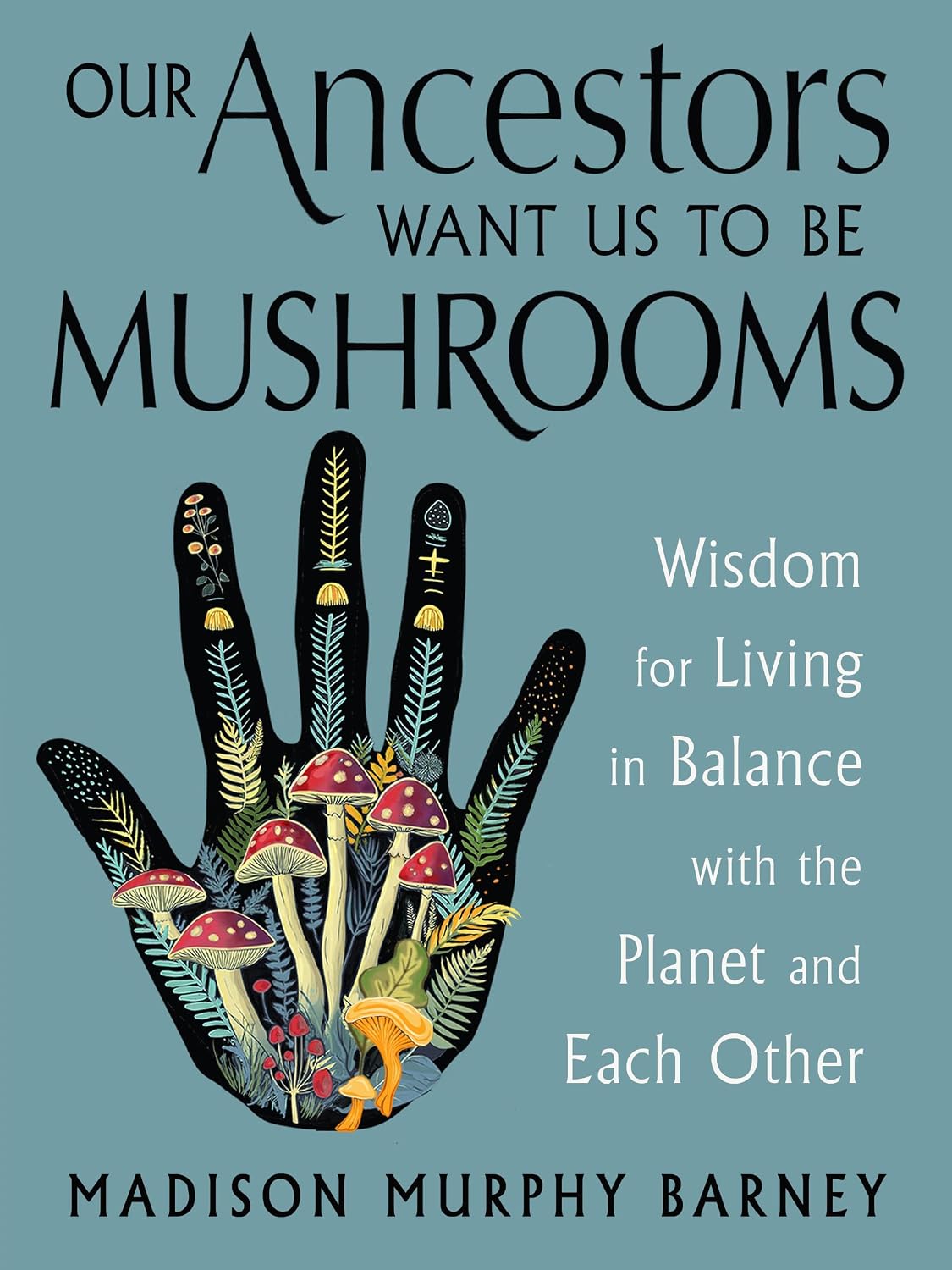
Our Ancestors Want Us to Be Mushrooms: Wisdom for Living in Balance with the Planet and Each Other
Madison Murphy Barney
Weiser Books, 2026
Reviewed By Katrina Rasbold
I confess that Our Ancestors Want Us to Be Mushrooms had me at the title. There are titles that dutifully explain what waits between the covers, and then there are titles that make you stop what you are doing and say, “Well, now I have to know what THAT means.” Madison Murphy Barney’s book certainly accomplishes the latter. What I did not expect was how quickly her whimsical premise would become something considerably deeper: an exploration of ancestry, community, ecology, resilience, creativity, and our responsibility to live as though we actually belong to this world rather than merely occupy it.
This is not a mushroom identification book, nor is it a foraging manual or another excursion into psychedelics. Barney uses fungi, particularly the sprawling mycelial networks beneath our feet, as both teachers and metaphor. Her central argument is deceptively simple. Mushrooms already know how to do many of the things humans seem to have forgotten. They cooperate. They transform what has died. They adapt. They nourish. They connect. They appear in astonishing individuality without abandoning the network that sustains them. Barney asks what might happen if we remembered how to do the same.
The book unfolds through interconnectedness and symbiosis, humility, beauty and delight, creativity and unique gifts, cycles and decomposition, protection and nourishment, flexibility and adaptability, and finally mystery and magic. That organization could easily have resulted in a series of pleasant nature metaphors. Instead, Barney repeatedly pushes the comparison further. The mushroom becomes a doorway into conversations about individualism, capitalism, environmental stewardship, Indigenous knowledge, social justice, creativity, rest, community care, and the ways we imagine the future.
One of the ideas I found most compelling is her insistence that we are not separate observers of nature. We are nature. The mushroom we see above ground is only the visible expression of an elaborate network operating largely beyond our sight. Barney finds an analogue in human communities: what suddenly becomes visible in a movement, creation, relationship, or cultural change has often been growing through unseen connections for a very long time.
That concept will hardly be foreign to Pagan readers. We speak readily of interconnectedness and the sacredness of the Earth. Barney, however, challenges us to consider what those ideas require of us once they leave the altar. If interconnectedness is real, it cannot remain merely a beautiful spiritual sentiment. How we consume, create, rest, relate to our neighbors, care for our bodies, protect the land, and participate in community all become expressions of that relationship.
There is also something wonderfully refreshing about a book concerned with the survival of humanity that makes room for beauty and delight. Barney refuses the assumption that joy is frivolous when serious problems are occurring. Instead, beauty becomes part of imagining what is possible. Mushrooms themselves cooperate in making this argument: strange, extravagant, sometimes ridiculous-looking little beings appearing from decay in colors and forms no sensible committee would ever have approved. Their beauty is also temporary. Some spectacular fungi exist visibly for only a short time before returning to the Earth, reminding us that impermanence does not make something less valuable.
That leads naturally into one of the book’s strongest discussions for me: living in cycles. We inhabit a culture that expects us to remain perpetually productive, while virtually nothing else in nature behaves that way. Barney reminds us that there are seasons for outward growth and seasons for withdrawal, restoration, shedding, and decomposition. Darkness is not simply something to hurry through on our way back to light. The tree shedding its leaves is not failing at being a tree. It is redirecting its resources toward its roots.
For Pagan readers accustomed to moving through a sacred year of waxing and waning, planting and harvest, death and renewal, this section feels particularly at home. It is one thing to celebrate seasonal cycles ceremonially and quite another to grant ourselves permission to participate in them.
Barney’s voice throughout is warm, irreverent, hopeful, and remarkably accessible. She can move from ecological systems and Indigenous teachings to Mister Rogers, TikTok, cult documentaries, beauty practices, and household projects without making the transitions feel particularly strange. Her background as a Two Spirit Shoshone, Hoopa, and mixed-European-ancestry public-health storyteller also informs the book’s understanding of health as something larger than an individual condition. Personal, communal, ancestral, and environmental well-being continually overlap.
The ancestral component is equally important. Barney does not present ancestors merely as names on genealogical charts or spirits summoned on particular nights of the year. Ancestry becomes a living inheritance of relationship, and she encourages readers to consider the ways earlier generations understood the lands beneath their feet, the seasons around them, the plants that fed them, and the communities upon which their survival depended. The invitation is not to reenact some romanticized past but to recover relationship while carrying forward what modern life has genuinely taught us.
Each chapter concludes with reflection questions and small invitations to practice. These are not cumbersome assignments requiring a new journal, seventeen colored pens, and a free weekend. They ask readers to notice. Where might greater flexibility help? Where might less flexibility be necessary? What beauty sustains you? Where can you make room for magic? Who helps you adapt when circumstances change? These questions transform the book from an interesting philosophy into something readers can actually begin incorporating into their lives.
Perhaps that is what I appreciated most about Our Ancestors Want Us to Be Mushrooms. It acknowledges enormous problems without leaving the reader carrying the impossible assignment of personally saving the world. Instead, Barney continually returns responsibility to the scale at which human beings can meaningfully act: our bodies, homes, relationships, communities, creativity, choices, and particular patches of Earth.
There is considerable hope here, but it is not passive hope. It is the hope of decomposition—the knowledge that what has reached the end of its usefulness can become material for something new. It is the hope of mycelium working underground before anyone sees the mushroom. It is the hope of adapting without surrendering, resting without disappearing, and discovering that individuality and interdependence were never opposites in the first place.
By the conclusion, Barney admits that humanity may have “lost the plot,” but she remains enthusiastic about our ability to find our way back.
Our Ancestors Want Us to Be Mushrooms is ultimately a love letter to a species that has wandered rather badly off course and to the magnificent living world that has been quietly demonstrating another way all along. It is thoughtful without becoming ponderous, spiritual without abandoning the material world, politically aware without surrendering itself to despair, and hopeful without pretending that hope alone will repair what we have damaged.
Apparently, the mushrooms have been trying to tell us something. It might be time we listened.
Want to join the conversation about this blog post? Go to the Green Egg Forum and scroll for the forum post that relates to this article
 As Editor of the Green Egg Blog, Katrina Rasbold weaves ancient wisdom into the complexities of modern life, fostering a space for deep inquiry and magical growth. Katrina is the editor of Green Egg Magazine, a priestess, author, and co-creator of the CUSP path, working from the crossroads of tradition and transformation. She owns and operates Crossroads Occult with her husband, Eric, offering a sanctuary for those seeking mentorship, quality handmade magical items, and authentic craft. Discover her full body of work at www.katrinarasbold.com.